
What to Look for in a Portable Tire Inflator for Winter
Cold weather drops tire pressure fast. Here's what to look for in a portable tire inflator to keep your tires properly inflated all winter.
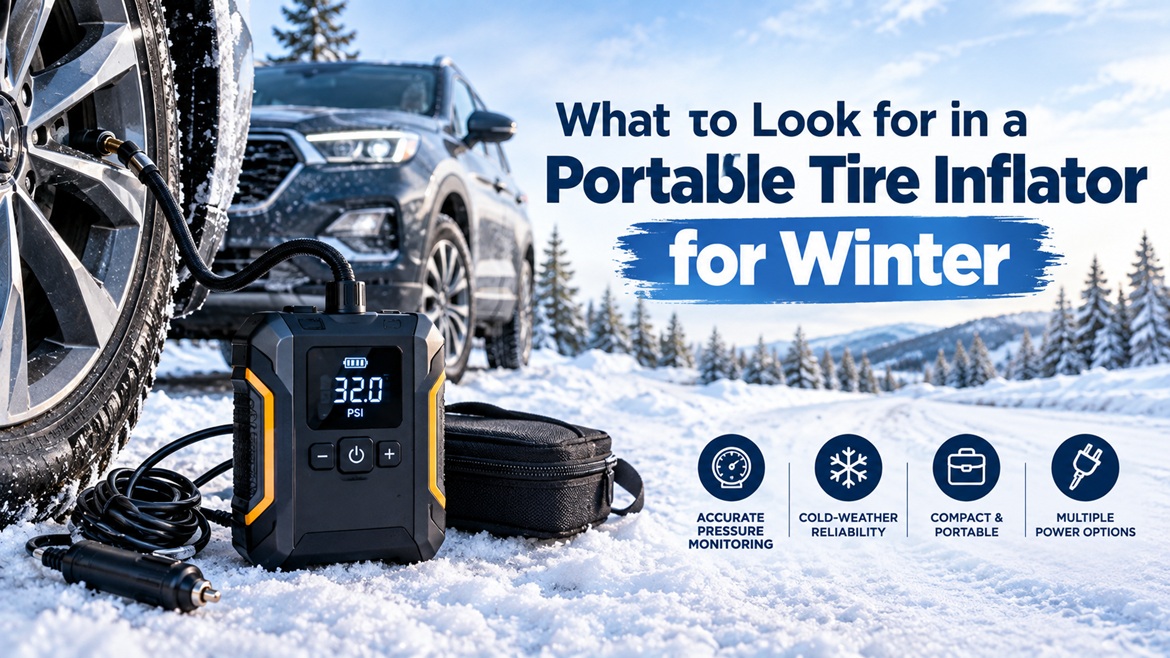
A good portable tire inflator for winter should plug into your vehicle's 12-volt outlet or run on a rechargeable battery, include an accurate built-in pressure gauge, inflate tires at a reasonable speed even in cold temperatures, and be compact enough to store permanently in the vehicle. Since tire pressure drops predictably as temperatures fall, having a reliable way to top up air on the spot is one of the more practical winter accessories a driver can own.
Cold weather causes tire pressure to drop consistently, sometimes enough to trigger a warning light after a sharp temperature swing. A portable inflator turns that inconvenience into a two-minute fix instead of a trip to a gas station air pump, which may itself be broken, occupied, or out of the way.
Power Source Options
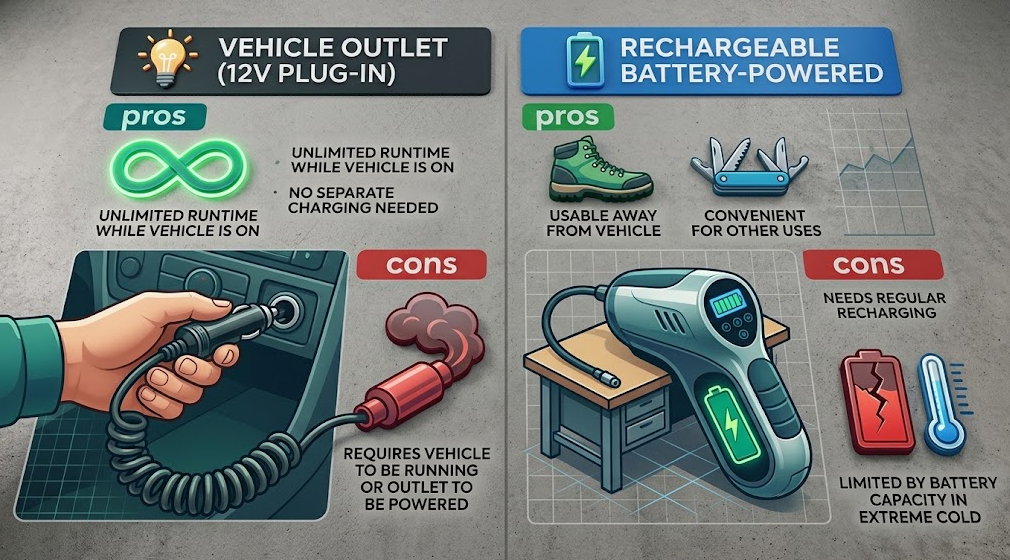
Power Source | Pros | Cons |
|---|---|---|
12V vehicle outlet (plug-in) | Unlimited runtime while the vehicle is on; no separate charging needed | Requires the vehicle to be running or the outlet to be powered |
Rechargeable battery-powered | Usable away from the vehicle; convenient for other uses | Needs regular recharging; limited by battery capacity in extreme cold |
Accuracy of the Built-In Gauge
An inflator's built-in gauge is only useful if it's reasonably accurate. Look for models with good reviews specifically mentioning gauge accuracy, and consider cross-checking readings periodically against a separate, dedicated tire gauge, since a built-in gauge that reads noticeably differently from a trusted reference could lead you to over- or under-inflate without realizing it.
Inflation Speed in Cold Temperatures
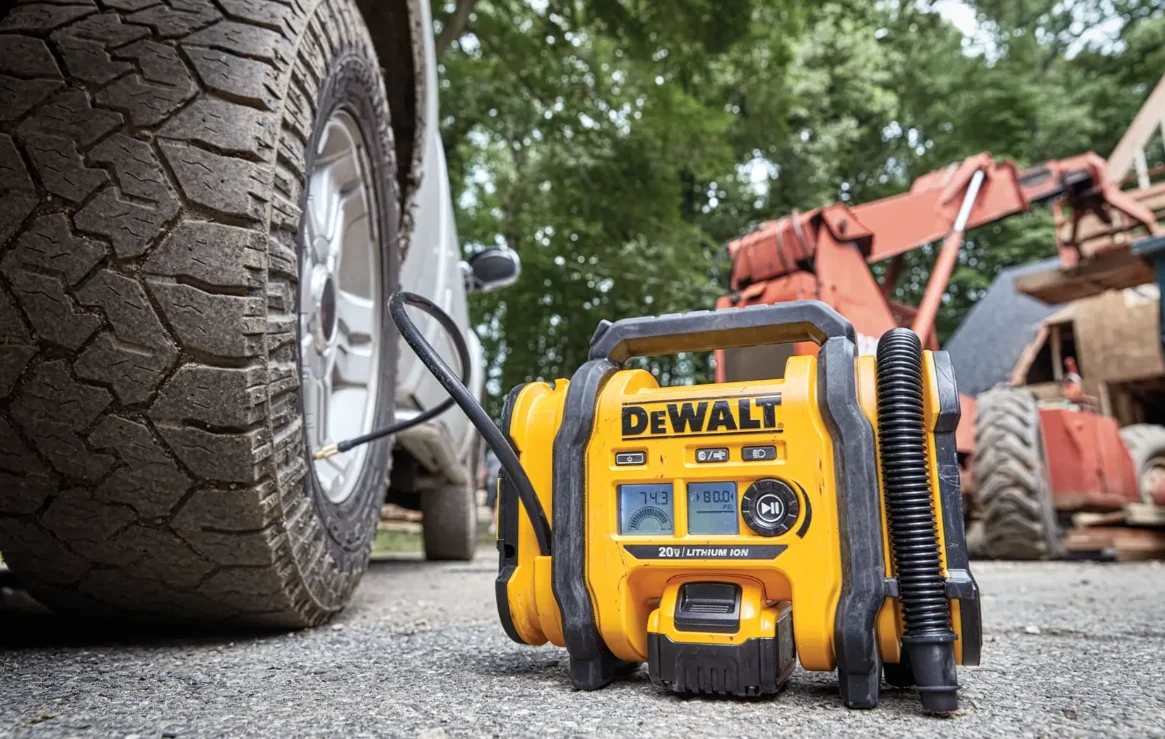
Small compressors can slow down in extreme cold, taking longer to reach the target pressure than the same unit would in mild weather. This isn't necessarily a dealbreaker, but it's worth knowing before you're relying on it in a hurry; reading reviews or product specifications for cold-weather performance, where available, can help set realistic expectations.
Additional Features Worth Considering
Auto-shutoff: Stops inflating automatically once your preset pressure is reached, reducing the risk of over-inflation
Digital display: Generally easier to read accurately than an analog dial, especially in low light
Built-in light: Useful for checking tires or working in a dark driveway or roadside situation
Compact storage case: Keeps the unit and its hose/cord organized in your trunk or glovebox
Using It as Part of Your Winter Routine
Pair your inflator with regular pressure checks rather than waiting for a warning light. See our guide on how cold weather affects tire pressure for how much pressure typically drops with temperature, and add a tire check to your monthly winter maintenance checklist.
Corded vs. Cordless Convenience
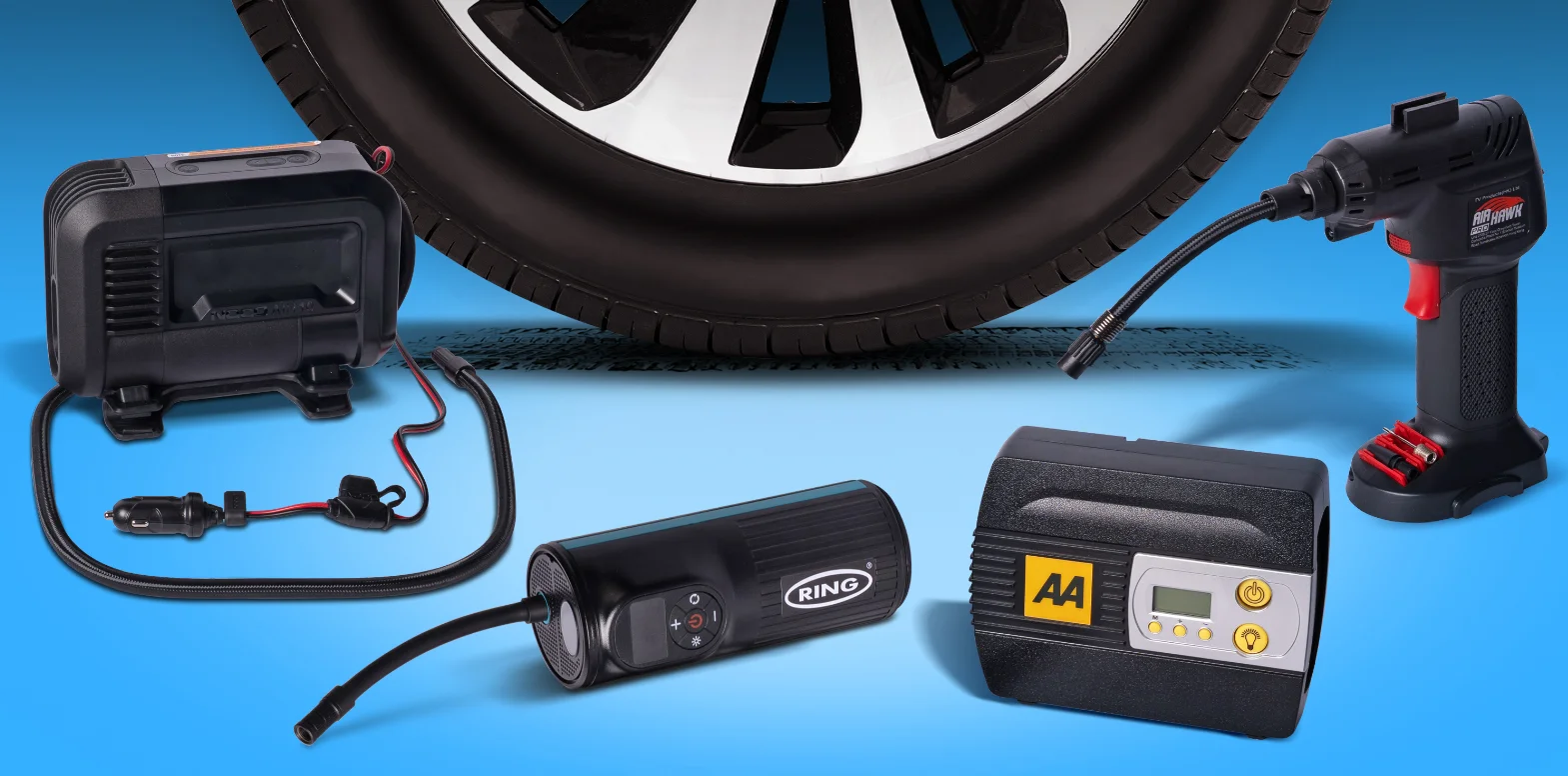
A corded 12V inflator plugged into your vehicle's outlet has effectively unlimited runtime as long as the vehicle is on, which suits most routine top-ups well. A cordless, battery-powered unit offers more flexibility, useful if you ever need to inflate something away from the vehicle, like a bike tire or a sports ball, but adds the responsibility of keeping it charged. Some drivers keep one of each for different situations.
Noise and Ease of Use in the Cold
Small compressors vary in how loud they are during operation; if this matters to you, particularly for late-night or early-morning use in a quiet neighbourhood, checking reviews for noise level is worthwhile. Look also for controls that are easy to operate with gloves on, since fumbling with tiny buttons in the cold is a common frustration with some budget models.
A Secondary Use: Getting Unstuck
Some drivers temporarily reduce tire pressure slightly to improve traction when stuck in soft or deep snow, then need to re-inflate immediately afterward. A portable inflator makes this technique practical, since you're not stuck without a way to bring the tire back to a safe pressure; see our guide on getting your car unstuck from snow for more on this method.
Where to Keep It
Store your inflator somewhere you'll actually remember and be able to reach, like a glovebox or a dedicated spot in the trunk, alongside the rest of your winter car emergency kit. A great tool that's buried under other gear or forgotten at home doesn't help you on the day you actually need it.
Frequently Asked Questions
Can a portable inflator fully replace visits to a gas station air pump?
For most routine top-ups, yes. For a tire that's severely underinflated or has a slow leak needing frequent attention, a shop visit to diagnose and repair the underlying issue is still worthwhile rather than relying solely on repeated top-ups.
Do I need a different inflator for larger vehicles like trucks or SUVs?
Most portable inflators handle typical passenger vehicle and light truck tires without issue, but check the manufacturer's specifications if you have unusually large tires, since inflation speed and maximum pressure capability can vary between models.
Can I use a portable inflator on a completely flat tire?
Small portable inflators are designed for topping up already-inflated tires, not necessarily for reinflating a completely flat one, and a fully flat tire often indicates a puncture or other issue that needs repair rather than just air. If a tire is flat, treat it as a repair situation rather than relying solely on a portable inflator to solve it.
Does a portable inflator work on bike tires and other inflatables too?
Many portable inflators include multiple nozzle attachments specifically for this purpose, making them useful beyond just car tires, for sports equipment, bike tires and inflatable items. This versatility can make the purchase feel more worthwhile if you have other uses for it beyond the vehicle.
How do I know what pressure to inflate my tires to?
The correct pressure for your vehicle is listed on a sticker inside the driver's door jamb or in the owner's manual, not on the tire's sidewall, which shows the tire's maximum rating rather than the recommended pressure for your specific vehicle.
Should I check tire pressure before or after driving?
Check pressure when tires are "cold," meaning the vehicle has been parked for at least a few hours, since driving heats the tires and produces a temporarily higher reading that doesn't reflect their true resting pressure.
About the author
NorthGrip Admin
Editor-in-chief at NorthGrip Auto.
Stay Winter-Ready
Get more winter driving tips and car care guides in your inbox.
Read Next
The Best Winter Car Accessories for Canadian Drivers
From scrapers to jump starters, here are the winter car accessories Canadian drivers actually benefit from, with links to a full buying guide for each.
How to Choose an Emergency Car Jump Starter
A portable jump starter can save your morning if your battery dies in the cold. Here's what to look for before buying one.
How to Choose the Best Snow Brush and Ice Scraper for Your Car
A good snow brush and ice scraper make winter mornings faster and safer. Here's what to look for before you buy either one.