
How to Choose an Emergency Car Jump Starter
A portable jump starter can save your morning if your battery dies in the cold. Here's what to look for before buying one.
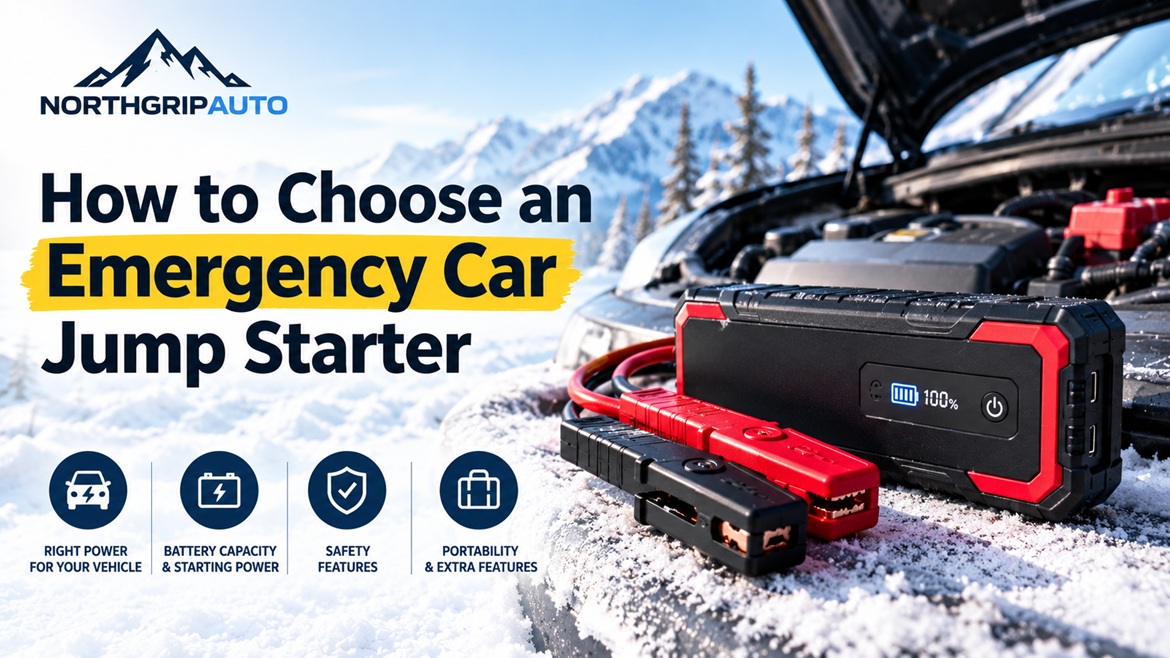
The right emergency car jump starter for winter use is one rated for your vehicle's engine size (larger engines, especially diesels, need a higher peak amp rating), compact enough to keep in the vehicle year-round, and rated to function in cold temperatures, since some battery packs lose capacity in extreme cold just like a vehicle's own battery does. A jump starter that works perfectly in a warm garage but can't deliver power at -20°C in your trunk isn't much use when you actually need it.
Portable lithium jump starters have largely replaced bulky jumper cables and a second vehicle as the practical solution for a dead battery, but not all of them are equally suited to Canadian winter conditions. Here's what matters most.
Peak Amps and Engine Size
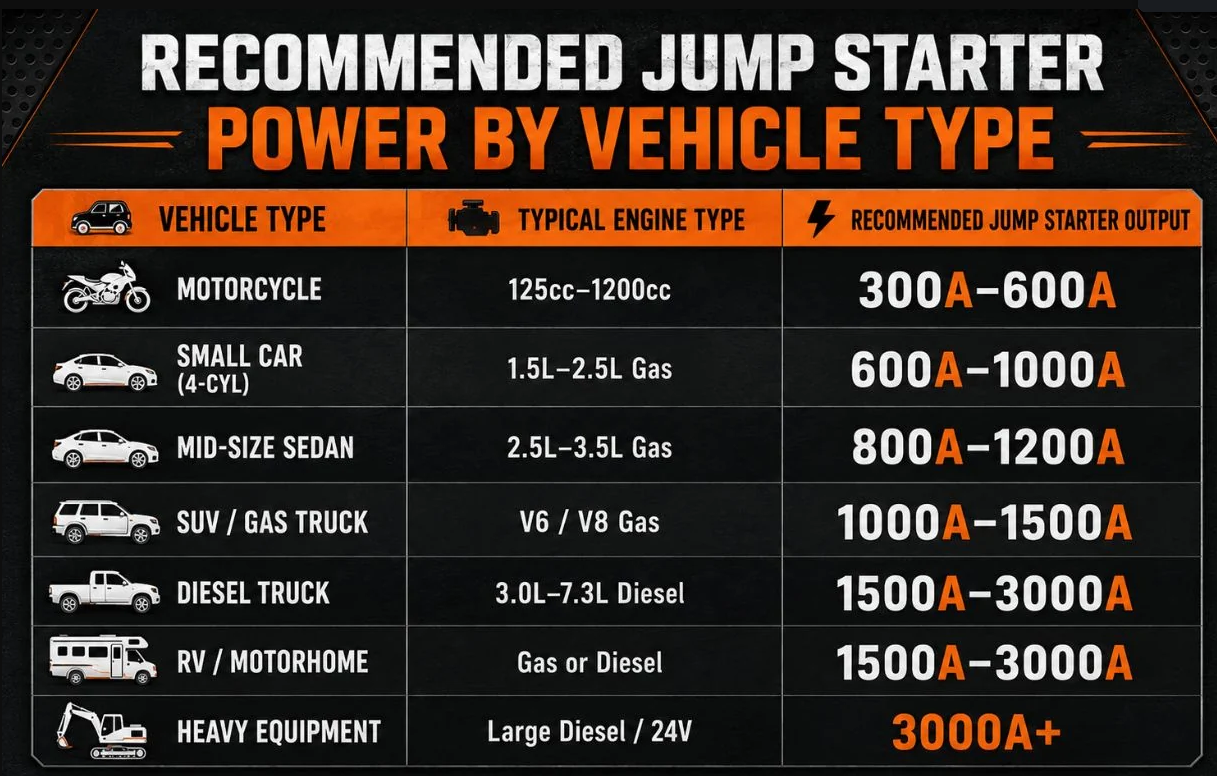
Jump starters are rated by peak amps, which indicates how much current they can deliver in a short burst to start an engine. Larger engines, and diesel engines in particular, generally require a higher peak amp rating than a small four-cylinder gasoline engine. Check the manufacturer's guidance for your specific engine size and type rather than assuming any jump starter will work for any vehicle.
Cold-Weather Performance
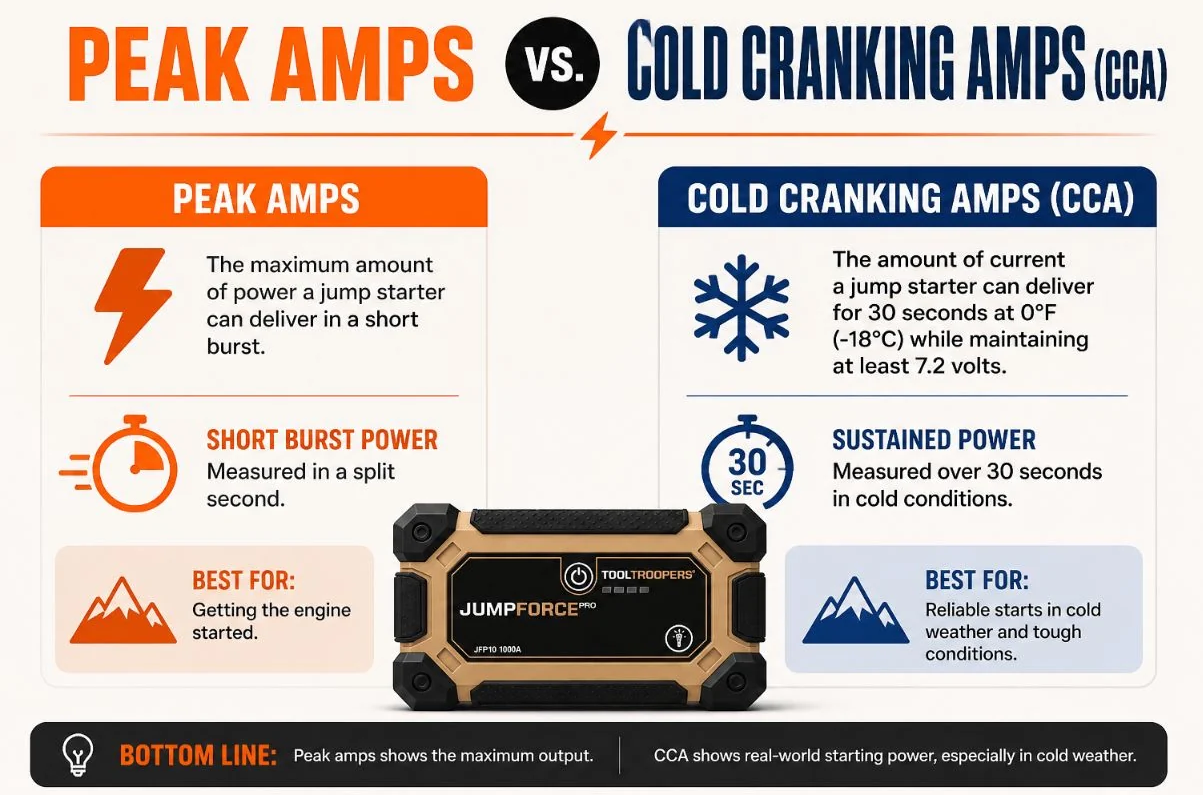
Look specifically for a jump starter with a stated operating temperature range that includes genuinely cold conditions, not just a general "portable" or "compact" label. Lithium battery packs, like vehicle batteries, can lose some capacity in extreme cold, so a unit rated for cold-weather use, and stored somewhere it doesn't sit at extreme temperatures for extended periods if possible, performs more reliably when you need it.
Key Features to Compare
Feature | Why It Matters |
|---|---|
Peak amps | Determines whether it can start your specific engine |
Battery capacity (mAh or Wh) | Affects how many jump-starts you get before recharging |
Built-in safety protections | Reverse polarity and short-circuit protection reduce risk of damage or injury |
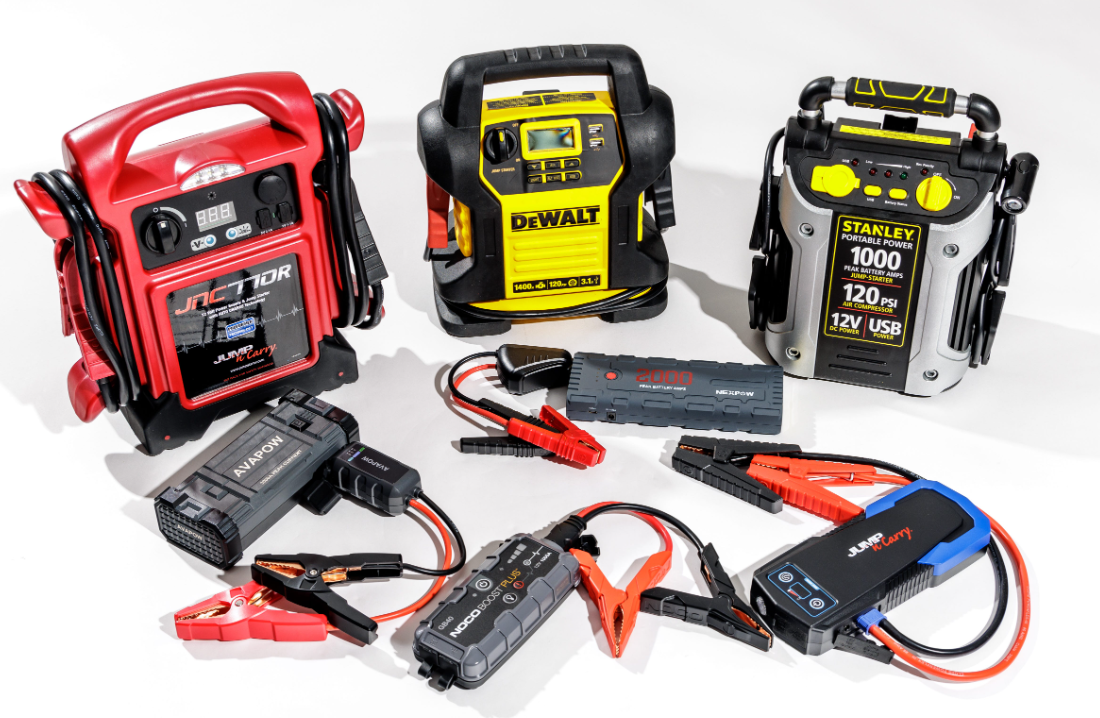
Additional features | USB charging ports, built-in flashlight, air compressor, useful for general emergency use |
Size and portability | Smaller units are easier to store but sometimes trade off battery capacity |
Safety Features Worth Prioritizing
Reverse polarity protection (which prevents damage if the clamps are connected backward) and short-circuit protection are worth prioritizing over marginal differences in size or price. These features reduce the risk of damaging your vehicle's electrical system or the jump starter itself if it's connected incorrectly, which is more likely to happen when you're cold, in a hurry, or using it for the first time.
How to Keep It Ready
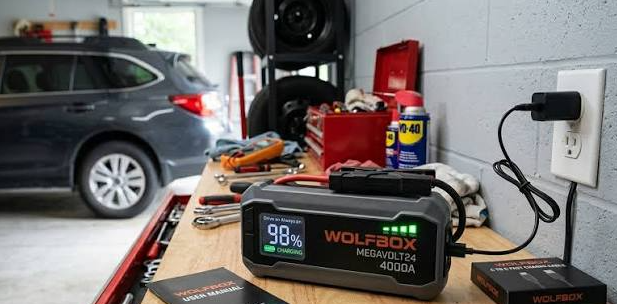
Charge it fully before winter begins, and recharge it periodically through the season, since these units slowly self-discharge over time even when not in use.
Store it somewhere accessible, like the glovebox or under a seat, rather than buried under other gear in the trunk.
Read the instructions once before you need them in an emergency, since correct clamp order (positive first, typically, then negative to an unpainted metal ground point) matters for safety.
Battery Capacity and Multiple Jump-Starts
A jump starter's stated battery capacity (often listed in mAh or Wh) affects how many jump-starts it can perform before needing a recharge. If you drive multiple vehicles, share the unit with family members, or simply want more of a buffer, a higher-capacity unit provides more uses per charge, though usually at a higher price and slightly larger size.
Compatibility With Different Vehicle Types
Most portable jump starters are designed for standard 12-volt vehicle electrical systems, which covers the vast majority of passenger cars, SUVs and light trucks. Larger diesel trucks, and some specialty or older vehicles, may have different requirements; check the manufacturer's compatibility information rather than assuming any jump starter works with any vehicle.
Jump Starters vs. Traditional Jumper Cables
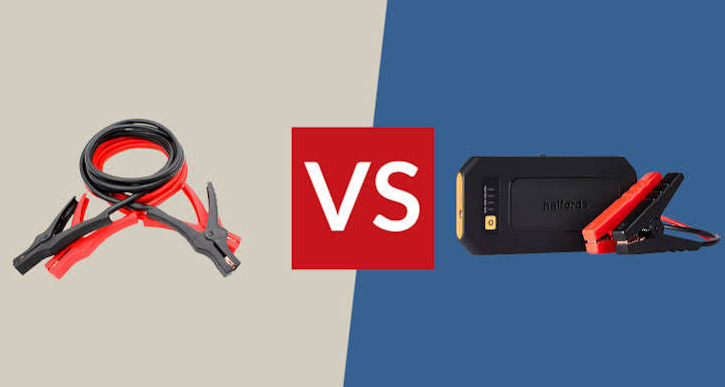
Traditional jumper cables require a second running vehicle, which isn't always available, especially on a quiet street or in a remote area. A portable jump starter lets you start your own vehicle without needing anyone else's help, which is a meaningful advantage in a Canadian winter where isolated cold-weather breakdowns are common. Many drivers now carry both: cables as a backup, and a portable unit as the primary tool.
Part of a Complete Cold-Weather Toolkit
A jump starter is most useful alongside the rest of your preparation, including understanding why batteries fail in the cold in the first place. See our guides on how cold weather affects your car battery and choosing the right winter car battery, and keep it with the rest of your winter car emergency kit.
Frequently Asked Questions
Can a jump starter damage my car's electronics?
A quality unit with proper safety protections and correct use poses minimal risk. Following the connection order in the manufacturer's instructions and using a unit with reverse polarity protection are the main safeguards against electrical damage.
How often does a portable jump starter need charging?
This varies by model, but most lose some charge gradually over weeks to months even sitting unused. Checking and topping up the charge once a month through winter is a reasonable habit to make sure it's ready when needed.
Is it safe to leave a jump starter in a cold vehicle all winter?
Most units are designed to tolerate being stored in a vehicle through normal winter temperature swings, but extreme, sustained cold can still reduce a lithium battery's available capacity temporarily. If possible, bringing it inside during the harshest cold snaps, or choosing a unit specifically rated for extreme cold storage, helps ensure it performs when needed.
Can I use a jump starter on someone else's vehicle to help them?
Yes, most portable jump starters work the same way regardless of whose vehicle needs starting, as long as the unit's peak amp rating is sufficient for that vehicle's engine. Helping a stranded driver with your jump starter is a reasonable and common use case beyond just your own vehicle.
Do I still need this if my vehicle has a newer, healthy battery?
Yes, it's still worth having. Batteries can fail unexpectedly regardless of age, and a jump starter is inexpensive insurance against being stranded, whether the cause is a genuinely failing battery or simply an accessory left on overnight that drained it.
About the author
NorthGrip Admin
Editor-in-chief at NorthGrip Auto.
Stay Winter-Ready
Get more winter driving tips and car care guides in your inbox.
Read Next

The Best Winter Car Accessories for Canadian Drivers
From scrapers to jump starters, here are the winter car accessories Canadian drivers actually benefit from, with links to a full buying guide for each.
What to Look for in a Portable Tire Inflator for Winter
Cold weather drops tire pressure fast. Here's what to look for in a portable tire inflator to keep your tires properly inflated all winter.

How to Choose the Best Snow Brush and Ice Scraper for Your Car
A good snow brush and ice scraper make winter mornings faster and safer. Here's what to look for before you buy either one.