
How to Choose the Best Snow Brush and Ice Scraper for Your Car
A good snow brush and ice scraper make winter mornings faster and safer. Here's what to look for before you buy either one.
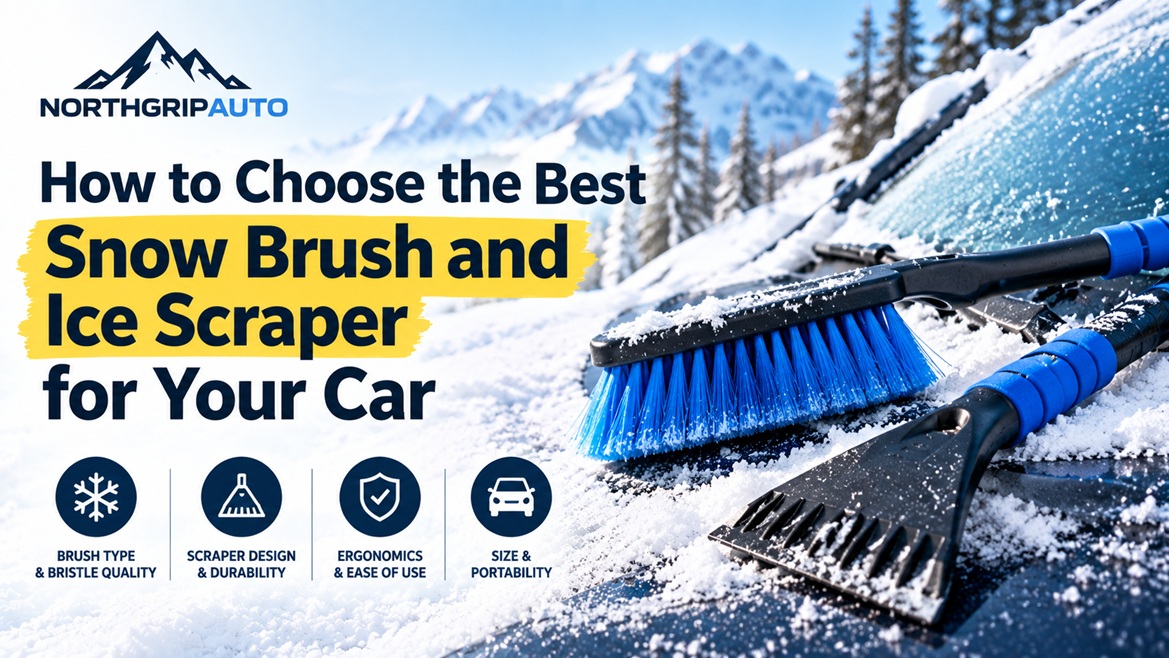
The best snow brush and ice scraper combination for most Canadian drivers includes a brush with a soft foam or bristle head on a handle long enough to reach the middle of your roof, paired with a sturdy plastic scraper with a comfortable, ideally foam-covered, grip. Many tools combine both in one device, which is convenient as long as you use each end for its intended surface: the brush for painted body panels, and the scraper strictly for glass.
These are inexpensive tools, but the difference between a good one and a poor one shows up every single snowy morning for months. Here's what actually matters when choosing them.
What to Look for in a Snow Brush
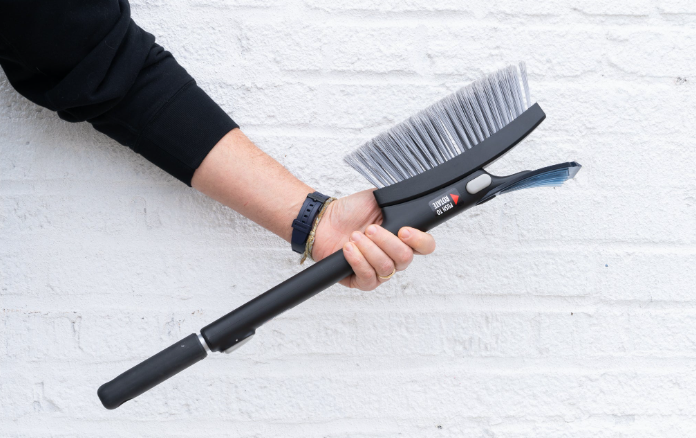
Head material: Soft foam or dense bristle heads are gentler on paint than stiff, hard-bristled alternatives.
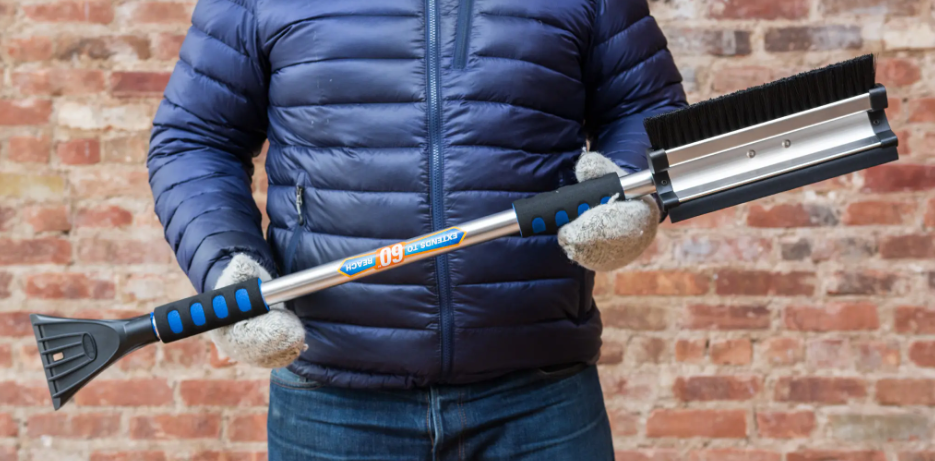
Handle length: A telescoping or extendable handle helps you reach the centre of a car roof or the roof of a taller SUV or truck without straining or leaving snow behind.
Handle grip: An insulated or foam-covered handle is more comfortable to hold with gloves on, and less painfully cold if you're briefly without gloves.
Durability: Cheaper brushes can shed bristles or crack at the head-to-handle joint after repeated seasons of use; a slightly higher-quality brush often lasts several winters rather than one.
What to Look for in an Ice Scraper
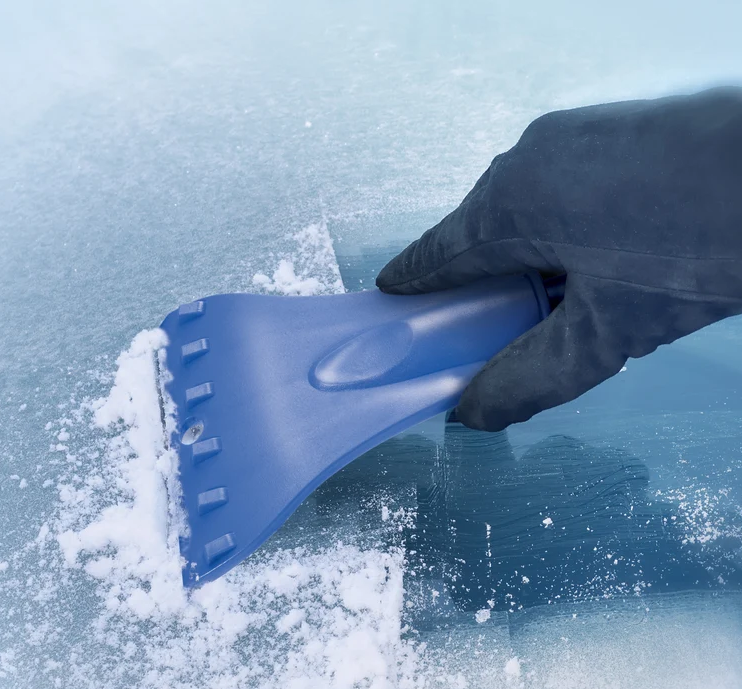
Blade material: A sturdy, rigid plastic blade is standard and safe for glass. Avoid metal blades entirely for automotive use, since they can scratch glass and definitely damage paint.
Blade width: A wider blade clears more area per stroke, though a narrower blade can be useful for tighter spots like around wipers and mirror edges.
Grip and comfort: A foam or rubberized handle is easier to grip firmly with cold hands or gloves on than bare, hard plastic.
Edge condition: A scraper's edge dulls and rounds over time, becoming less effective; a worn scraper is worth replacing rather than continuing to use with more effort.
Combo Tools: Brush and Scraper in One
Style | Pros | Cons |
|---|---|---|
Combo tool (brush one end, scraper the other) | Convenient, one tool to store and grab | Risk of using the wrong end on the wrong surface if you're not careful |
Separate brush and scraper | Purpose-built for each surface, often more durable per task | Two items to store and keep track of |
Specialty and Extended-Reach Tools
Drivers with taller vehicles, like large SUVs, vans or trucks, may benefit from an extended-reach brush specifically designed for taller rooflines, since a standard-length brush can leave the centre of a tall roof only partially cleared. Some brushes also include a squeegee edge for clearing slush and water, which can be useful during freeze-thaw conditions common in parts of Atlantic Canada and Southern Ontario.
How Many Should You Keep on Hand?
It's worth keeping one in every vehicle you regularly drive, rather than moving a single tool between cars, since you can't predict which vehicle you'll need to clear on a given morning. A spare in the trunk, separate from the one you keep readily accessible, is a reasonable backup in case one breaks or goes missing.
Where to Store Them for Easy Access
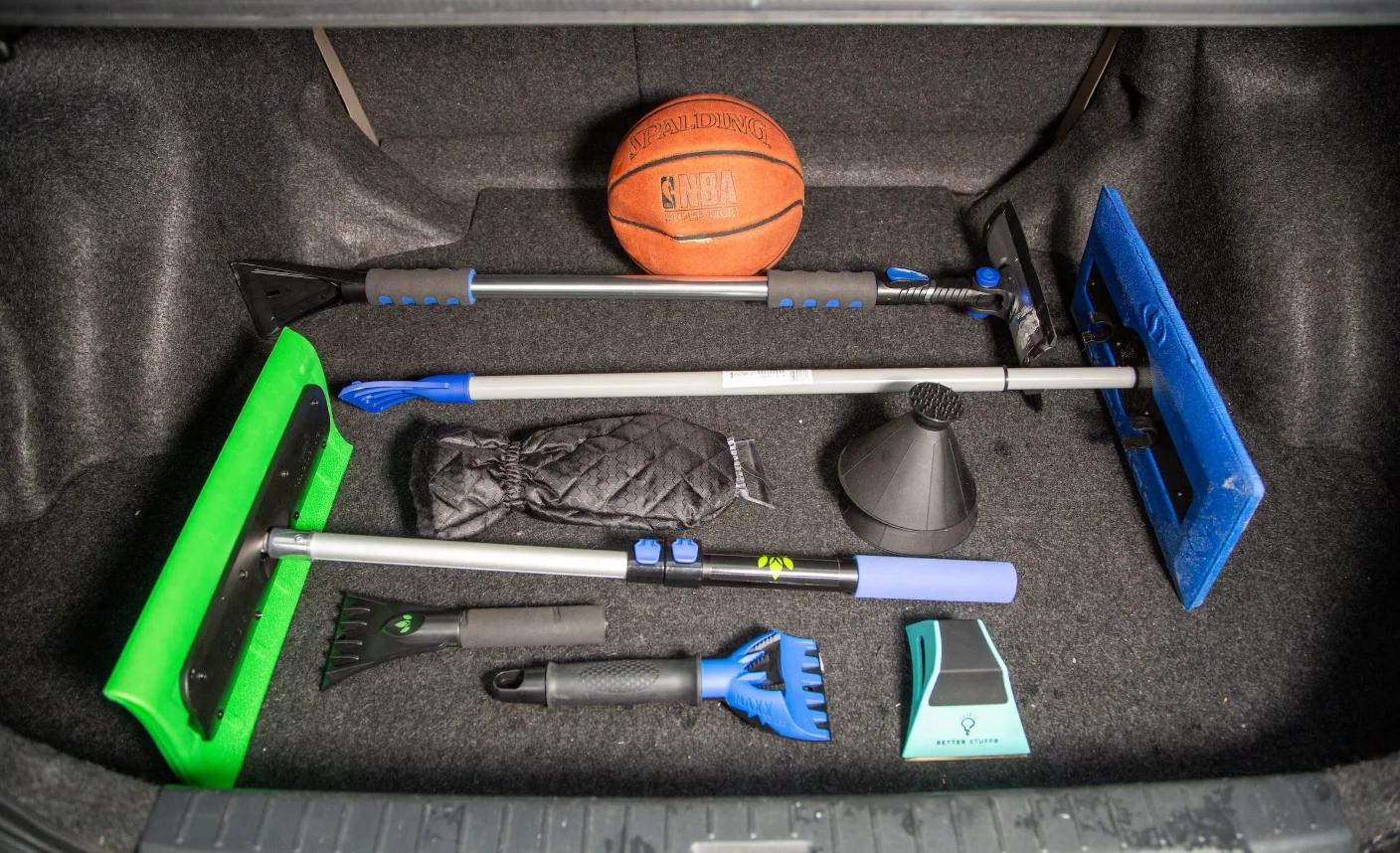
A brush and scraper left in the trunk are often less useful than ones kept in the back seat or front passenger area, where you can grab them without needing to open the trunk in a snowstorm first, or reach through a snow-covered trunk lid. Many drivers keep one set easily accessible inside the cabin and a spare in the trunk as backup.
Considering Your Climate and Typical Snow Type
Regions with frequent heavy, wet snow, like parts of coastal British Columbia, may benefit from a brush with a built-in squeegee edge to manage slush, while regions with drier, powdery snow common in the Prairies may prioritize a lightweight brush that clears quickly without needing much force. There's no single perfect tool for every region, so consider your typical local conditions when choosing.
Using These Tools Correctly
Even the best tool can damage paint if used incorrectly. Our guide on removing snow from your car without scratching the paint covers proper technique, and our guide on removing ice from your windshield safely covers the correct approach for frozen glass specifically.
Replacing Worn-Out Tools
Both brushes and scrapers wear out gradually rather than failing all at once, which makes it easy to keep using a degraded tool without noticing how much slower or less effective it's become. If clearing your vehicle seems to be taking noticeably longer than it used to, a worn tool, rather than worse weather, may be part of the reason.
Frequently Asked Questions
Is a more expensive snow brush actually better?
Not always, but very cheap options often use thinner plastic and looser bristles that wear out within a single season. A mid-range option from a known brand is usually a reasonable balance of cost and durability for most drivers.
Can I use a squeegee-style scraper on a windshield with a chip or crack?
Use extra caution on any windshield with existing damage, regardless of tool. Applying firm pressure near a chip or crack can cause it to spread; gentler brushing and de-icer spray are safer choices until the damage is repaired.
Do heated ice scrapers actually work well?
Battery-powered heated scrapers, which warm the blade slightly to help loosen ice, can be genuinely helpful for stubborn, thick ice, though they typically work more slowly than a determined manual scraping session and require charging. They're a reasonable supplementary tool rather than a full replacement for a standard scraper.
Where can I buy a good snow brush and scraper in Canada?
Most hardware stores, auto parts retailers, and general retailers carry a range of options, especially in the fall as winter stock arrives. Buying in person lets you check handle length, grip comfort and build quality directly, which is harder to judge from an online listing alone.
Is it worth buying more than one brush per household?
If your household has more than one vehicle, yes, since moving a single tool between cars often means it isn't where you need it when you need it. A modest additional cost is worth the convenience of having one dedicated to each vehicle.
About the author
NorthGrip Admin
Editor-in-chief at NorthGrip Auto.
Stay Winter-Ready
Get more winter driving tips and car care guides in your inbox.
Read Next
The Best Winter Car Accessories for Canadian Drivers
From scrapers to jump starters, here are the winter car accessories Canadian drivers actually benefit from, with links to a full buying guide for each.
What to Look for in a Portable Tire Inflator for Winter
Cold weather drops tire pressure fast. Here's what to look for in a portable tire inflator to keep your tires properly inflated all winter.
How to Choose an Emergency Car Jump Starter
A portable jump starter can save your morning if your battery dies in the cold. Here's what to look for before buying one.