
How to Get Your Car Unstuck From Snow: 10 Safe Methods
Car stuck in snow? These 10 safe, proven methods will get you moving again without damaging your vehicle or making the situation worse.
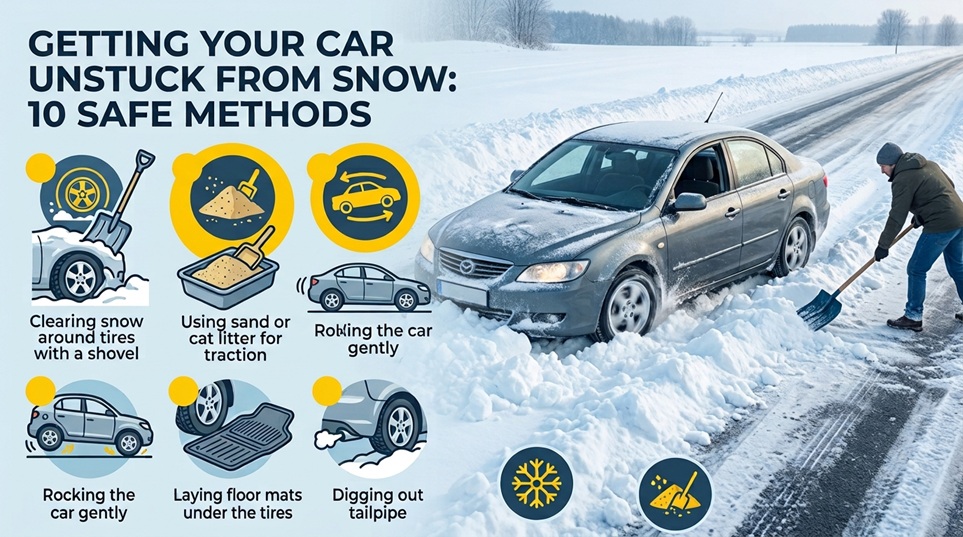
Getting your car stuck in snow happens to careful and experienced drivers alike — an unplowed driveway, a snowbank at the edge of a parking lot, or a patch of deep snow on a rural road can trap even a well-prepared vehicle. Panicking and flooring the accelerator almost always makes things worse. Here are ten safe methods to try, roughly in the order we recommend attempting them.
1. Straighten Your Wheels First
Before doing anything else, straighten your front wheels. Turned wheels create more resistance and dig a deeper rut, while straight wheels give you the best chance of rolling forward or backward out of the snow.
2. Clear Snow From Around the Tires
Use the shovel from your winter emergency kit to clear snow away from all four tires and from underneath the vehicle if it's resting on packed snow. Removing this resistance is often enough on its own to get moving again.
3. Rock the Vehicle Gently
Shift between drive and reverse in small, gentle movements, using light throttle each time, to rock the vehicle out of the rut it has dug. Avoid aggressive throttle, which tends to melt the snow under the tires into slick ice rather than providing traction.
4. Use Traction Aids
Sand, kitty litter, or dedicated traction mats placed just in front of (or behind, depending on your direction) the drive wheels can provide the extra grip needed to get moving. This is exactly why these items are standard recommendations in any winter emergency kit.
5. Try the Floor Mat Trick
In a pinch, your vehicle's rubber floor mats, placed textured-side up under the drive wheels, can provide enough temporary traction to get unstuck, especially combined with gentle rocking.
6. Reduce Tire Pressure Slightly
Letting a small amount of air out of your tires (a temporary measure only, to be re-inflated immediately after) increases the tire's contact patch with the snow and can improve grip in soft or deep snow. This is an advanced technique best reserved for situations where you have a way to re-inflate the tires afterward.
7. Get a Push
If other people are available, a push from the front or back, timed with your gentle acceleration, is one of the most effective and lowest-risk methods, especially combined with clearing snow from around the tires first.
8. Cut a Path With a Shovel
For deeper snow, shovel a clear path in the direction you intend to drive, rather than just clearing immediately around the tires. A few metres of cleared path is often enough to build the momentum needed to get through the rest.
9. Prevent Future Incidents With the Right Tires
Getting stuck is far less common with a properly matched tire and drivetrain setup. Our comparisons of winter tires vs. all-season tires and AWD vs. 4WD vs. FWD in winter both cover how to reduce the odds of getting stuck in the first place.
10. Call for a Tow When Nothing Works
If you've tried the methods above without success, or if continuing to try risks damaging the vehicle (spinning tires for extended periods can overheat the transmission or a CVT), it's time to call for a tow rather than risk further damage or personal injury on the roadside.
Frequently Asked Questions
Should I keep flooring the accelerator if my wheels are spinning?
No. Continuous wheel-spin melts the snow beneath the tires into slick ice, making the situation worse and risking damage to the transmission. Gentle, controlled throttle input works far better.
What's the most important item to keep in the car to avoid getting stuck?
A small shovel and a bag of sand or kitty litter cover the majority of situations. See our complete winter car emergency kit checklist for the full list we recommend keeping in every vehicle.
About the author
NorthGrip Admin
Editor-in-chief at NorthGrip Auto.
Stay Winter-Ready
Get more winter driving tips and car care guides in your inbox.
Read Next
How to Drive Uphill and Downhill Safely on Snow and Ice
Hills change everything on snow and ice. Here's how to drive uphill and downhill safely, from momentum management to engine braking.
How to Stop Safely and Handle a Skid on Snow and Ice
Braking distances triple on ice, and skids happen fast. Here's how to stop safely on snow and ice, and what to do if your car starts to slide.
How to Drive Safely on a Snow-Covered Highway
Highway speeds make snow-covered roads more demanding. Here's how to drive safely on a snow-covered highway across Canada.