
Complete Winter Car Emergency Kit Checklist
If you get stranded in a Canadian winter storm, this kit could keep you safe until help arrives.
Every Canadian vehicle should carry a winter emergency kit from November through April. Highway closures, whiteouts and multi-vehicle collisions can leave drivers stranded for hours, sometimes overnight, especially on rural or northern routes with long distances between services. A well-stocked kit won't prevent a breakdown, but it can keep you safe, warm and visible until help arrives. Here's exactly what to include, organized by purpose.
Warmth
- Blanket or sleeping bag rated for sub-zero temperatures
- Extra hat, gloves, scarf and wool socks
- Chemical hand and foot warmers
- A change of dry clothes if you regularly drive in wet or slushy conditions
If your engine dies and you can't run the heater, body heat retention becomes your main defence against hypothermia, so don't skimp on this category.
Visibility & Signaling
- Flashlight or headlamp with extra batteries
- Reflective triangles or road flares
- Bright cloth or reflective tape to tie to the antenna or side mirror
- A whistle to signal for help if you need to leave the vehicle
Traction & Tools
- Small folding shovel
- Sand, salt or kitty litter for traction under stuck tires
- Ice scraper and snow brush
- Tow strap or rope
- Basic tool kit and duct tape
These items are also useful for everyday winter driving, not just emergencies — see our guide on removing ice from your windshield safely for how to use your scraper correctly without damaging the glass.
Food, Water & Communication
- Non-perishable snacks (granola bars, nuts, dried fruit)
- Bottled water (store where it won't freeze solid and crack the container)
- Portable phone charger or power bank, fully charged
- First aid kit
- Paper map as a backup if cell service is unreliable
Power & Battery Backup
- Jumper cables or a portable lithium jump starter
- Spare fuses for your vehicle's specific fuse box
Cold weather is hard on batteries even when everything else is working correctly — see our explainer on how cold weather affects your car battery for why this matters more in winter than any other season.
Where and How to Store Your Kit
Store the kit in your trunk all winter, not just when a storm is forecast — breakdowns rarely happen on schedule. Use a sturdy bag or bin so items don't roll around, and check it at the start of each season to replace expired snacks, dead batteries and used supplies.
Frequently Asked Questions
Should I stay in my vehicle if I break down in a storm?
In most cases, yes. Your vehicle offers shelter from wind and cold, and it's easier for rescuers to spot a car than a person on foot. Run the engine periodically for heat, but make sure the exhaust pipe isn't blocked by snow to avoid carbon monoxide buildup.
How often should I check my emergency kit?
At the start of each winter season at minimum. Check expiry dates on food and batteries, and top up anything used during the previous season before the first snowfall.
About the author
NorthGrip Admin
Editor-in-chief at NorthGrip Auto.
Stay Winter-Ready
Get more winter driving tips and car care guides in your inbox.
Read Next
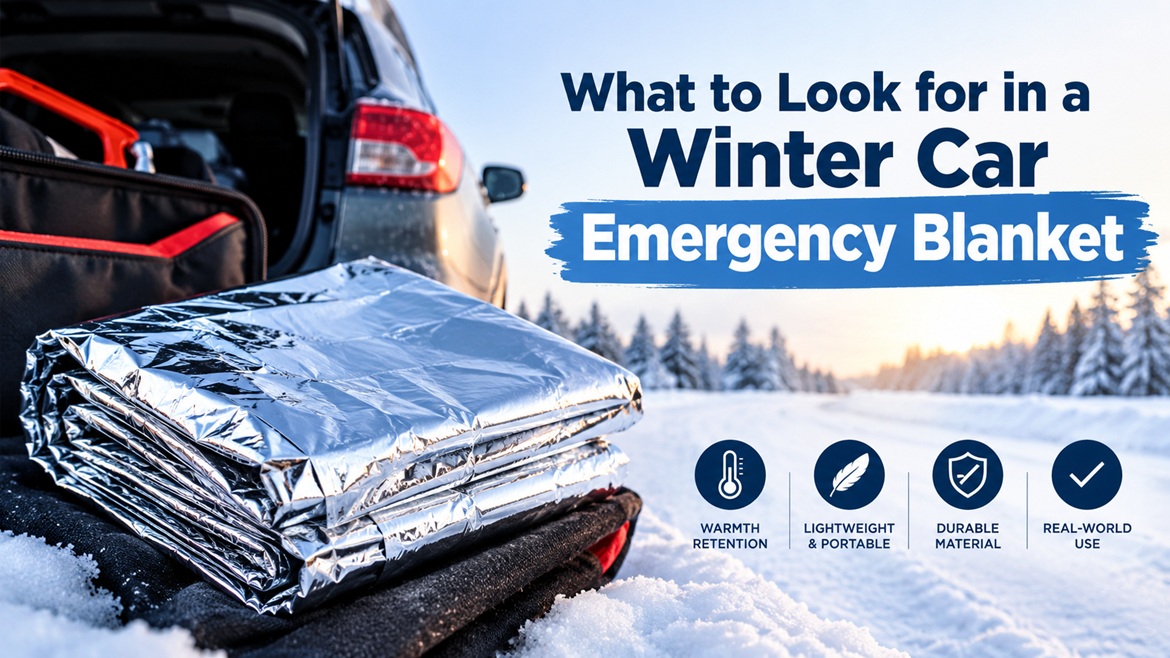
What to Look for in a Winter Car Emergency Blanket
A good emergency blanket can matter a lot if you're ever stranded in the cold. Here's what to look for before you buy one for your car.
What to Do if Your Car Gets Stuck on a Winter Highway
Stranded on a highway during a storm or closure? Here's how to stay safe and warm if your car gets stuck on a winter highway in Canada.
How to Drive Safely During a Winter Storm
From heavy snow to sudden whiteouts, here's how to drive safely during a winter storm in Canada, and when it's safer to simply pull over.