
How to Check Your Car's Coolant Before Winter
Learn how to check your car's coolant level and condition before winter, including what a healthy mix looks like and when to top it up.
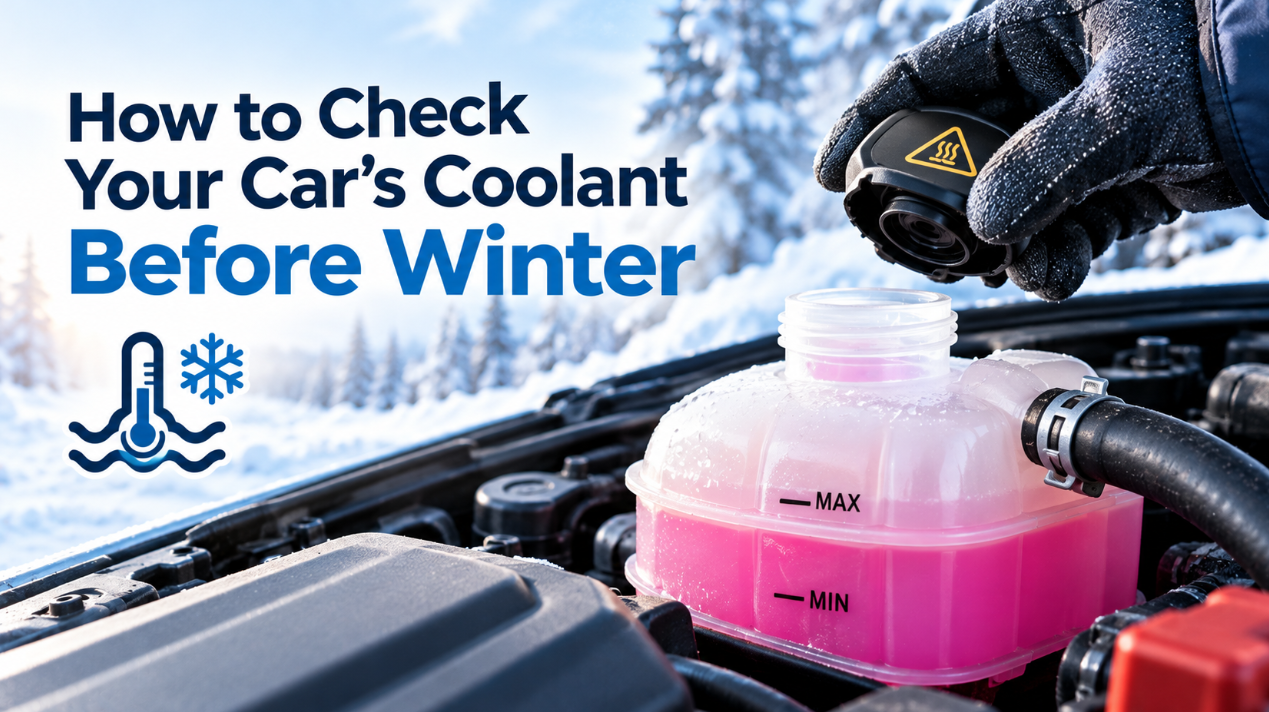
Checking your coolant before winter takes about five minutes: with the engine cold, look at the coolant reservoir's level markings, confirm the fluid looks clean rather than rusty or oily, and top up with the correct pre-mixed coolant if it's low. A quick test strip or a shop check can also confirm the mixture is still rated for cold enough temperatures.
Coolant does two jobs that matter for winter driving: it keeps your engine from overheating, and it keeps the same fluid from freezing solid in cold weather. A coolant system that's low, contaminated, or diluted with too much plain water can leave you with a frozen or overheating engine at the worst possible time. Here's how to check it properly, and what to do if something looks off.
Why Coolant Needs Attention Specifically Before Winter
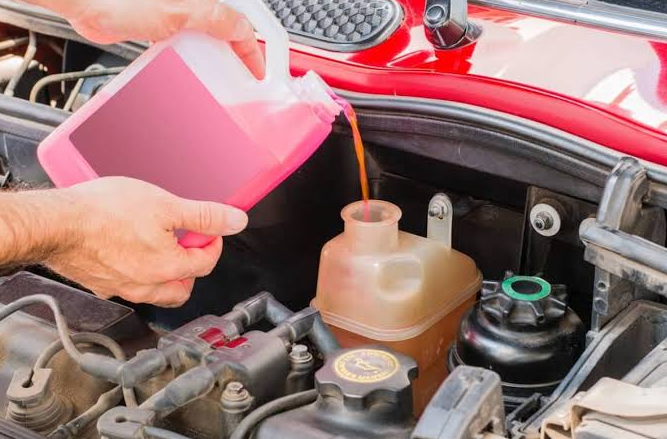
Coolant works quietly in the background most of the year, and it's easy to forget it needs any attention at all. Two things change its importance heading into winter: the freeze-protection side of its job, which is irrelevant in summer, suddenly matters, and any small leak that was slowly worsening over the year is more likely to cause a real problem once temperatures drop and the system is under more stress from cold starts. A coolant check before winter is really about confirming both the level and the freeze protection are where they need to be before conditions get demanding.
Where to Find the Coolant Reservoir
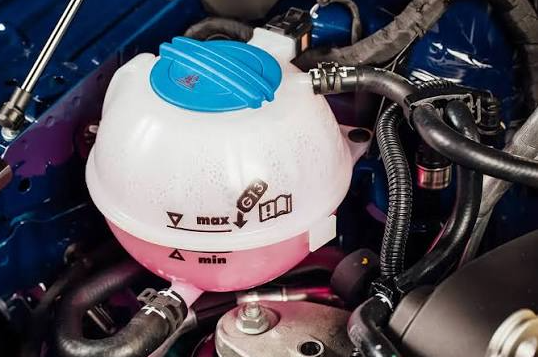
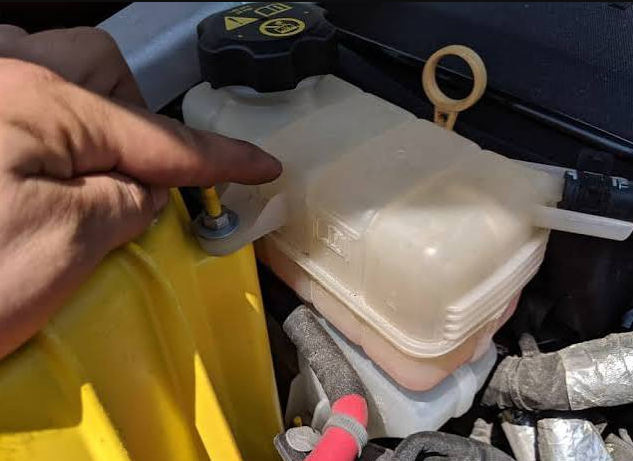
Most vehicles have a translucent plastic coolant reservoir under the hood, usually marked with "MIN" and "MAX" lines and often a bright orange, green, pink or blue cap. Check your owner's manual if you're not sure which container is the coolant reservoir versus the windshield washer fluid tank — they're sometimes similar in size and placement.
How to Check the Level
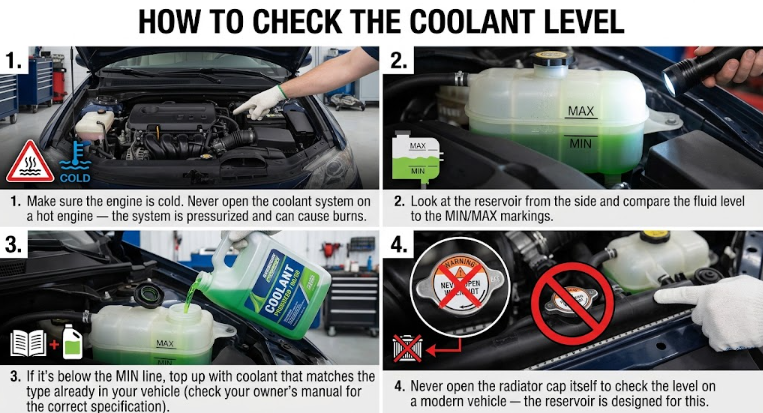
Make sure the engine is cold. Never open the coolant system on a hot engine — the system is pressurized and can cause burns.
Look at the reservoir from the side and compare the fluid level to the MIN/MAX markings.
If it's below the MIN line, top up with coolant that matches the type already in your vehicle (check your owner's manual for the correct specification).
Never open the radiator cap itself to check the level on a modern vehicle — the reservoir is designed for this.
What Healthy Coolant Looks Like
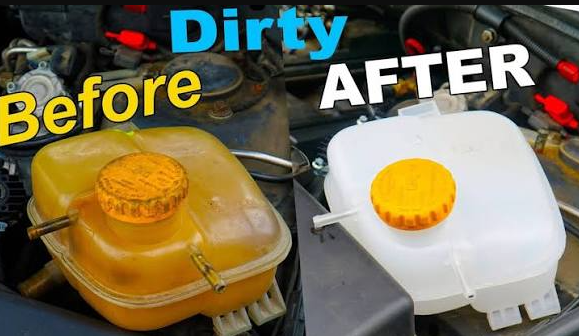
Coolant should look clean and translucent in its usual colour (commonly green, orange, pink or blue depending on the formulation). Cloudy, rusty-brown, or oily-looking coolant can indicate contamination or a cooling system problem, and is worth having inspected by a mechanic rather than simply topped up.
Checking the Freeze Protection
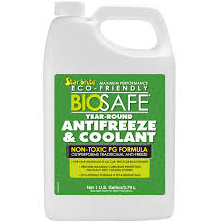
Coolant is normally mixed with water, and the ratio determines how cold it can get before freezing. A 50/50 mix is a common standard for many climates, though colder regions may call for a richer mix, within the range your manufacturer allows. Auto parts stores and shops can test your coolant's freeze point with an inexpensive tester in a couple of minutes if you're not sure what's currently in your system.
Signs Your Coolant Needs Attention
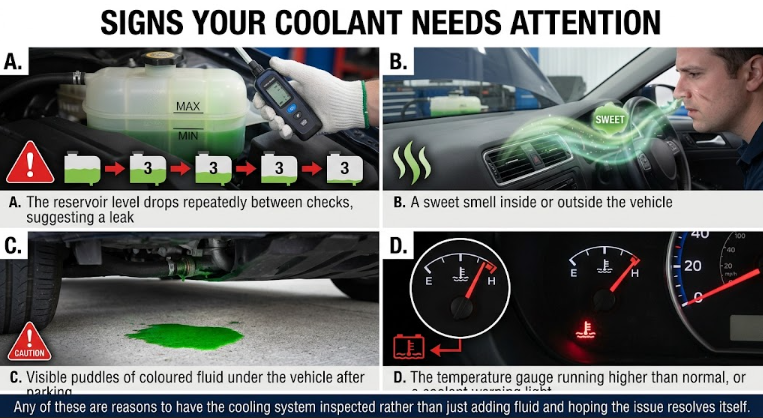
The reservoir level drops repeatedly between checks, suggesting a leak
A sweet smell inside or outside the vehicle
Visible puddles of coloured fluid under the vehicle after parking
The temperature gauge running higher than normal, or a coolant warning light
Any of these are reasons to have the cooling system inspected rather than just adding fluid and hoping the issue resolves itself.
What Happens if Coolant Freezes
If the mixture isn't rated for the temperatures it's exposed to, the coolant can thicken or partially freeze, which reduces its ability to circulate and protect the engine. In more serious cases, frozen coolant can expand enough to crack a radiator, a hose fitting, or in extreme scenarios the engine block itself. This is a real but avoidable risk — a correct coolant mix, checked once before winter and again partway through the season, is enough to prevent it for the vast majority of drivers.
Different Coolant Types
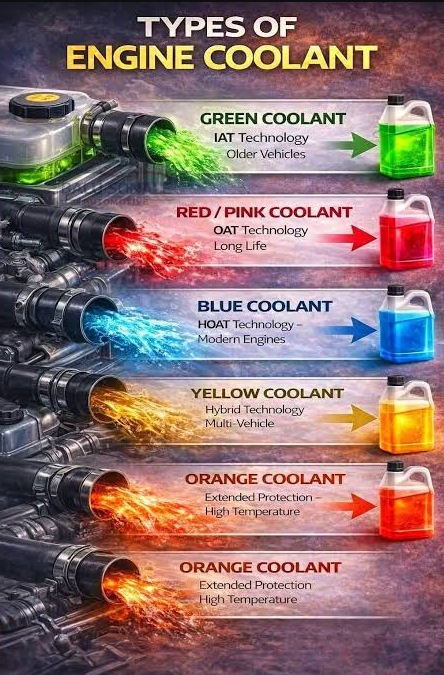
Coolant isn't universal. Vehicles use different coolant formulations (sometimes described by colour, though colour alone isn't a reliable way to identify type), and mixing incompatible coolants can reduce corrosion protection or cause the fluid to break down. If you're topping up and don't know what's already in the system, using a "universal" coolant labelled compatible with your vehicle type, or having a shop handle it, is safer than guessing. Always check your owner's manual for the specific coolant type your manufacturer recommends.
DIY Check vs. Professional Service
Checking the level and general appearance of your coolant is a simple, safe task for most drivers. Testing the exact freeze point, flushing old coolant, or diagnosing a leak are better handled by a mechanic, since they may involve pressure-testing the system or identifying a failing part like a hose, gasket or radiator. If your coolant level keeps dropping between checks but you can't see an obvious external leak, that's a sign to have it looked at rather than continuing to top it up indefinitely.
How This Fits Into Your Winter Routine
Coolant is just one of several fluids that need attention before winter. See our winter car fluids guide for washer fluid, oil, brake fluid and more, and add a coolant check to your monthly winter maintenance checklist so a slow leak doesn't go unnoticed until a cold morning breakdown.
Frequently Asked Questions
Can I just top up with water if I don't have coolant on hand?
Only as a very short-term measure to get you to a shop, since plain water raises the freezing point of the mixture and offers less corrosion protection. Replace it with a proper coolant mix as soon as possible.
How often should coolant be fully replaced, not just topped up?
This varies by vehicle and coolant type — check your owner's manual for the manufacturer's recommended interval, since some modern long-life coolants are rated for many years while older formulations need more frequent replacement.
About the author
NorthGrip Admin
Editor-in-chief at NorthGrip Auto.
Stay Winter-Ready
Get more winter driving tips and car care guides in your inbox.
Read Next
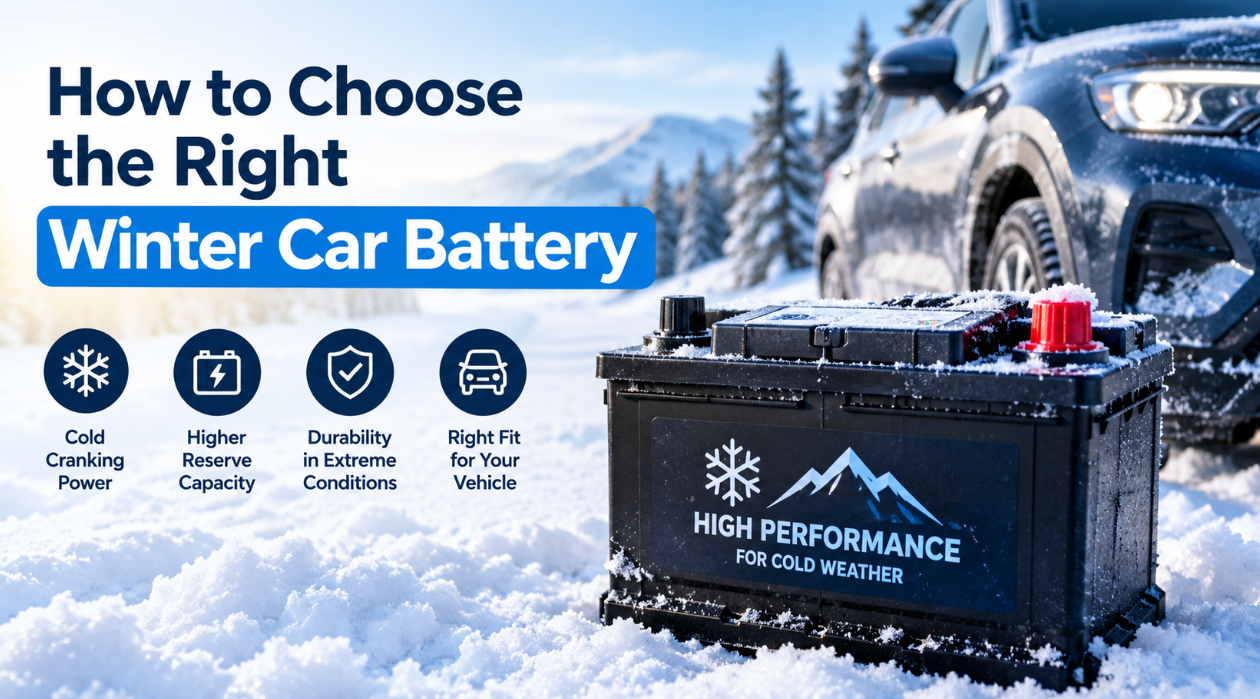
How to Choose the Right Winter Car Battery
Not all car batteries handle Canadian winters equally well. Here's what to look for, including cold cranking amps, size and battery type.
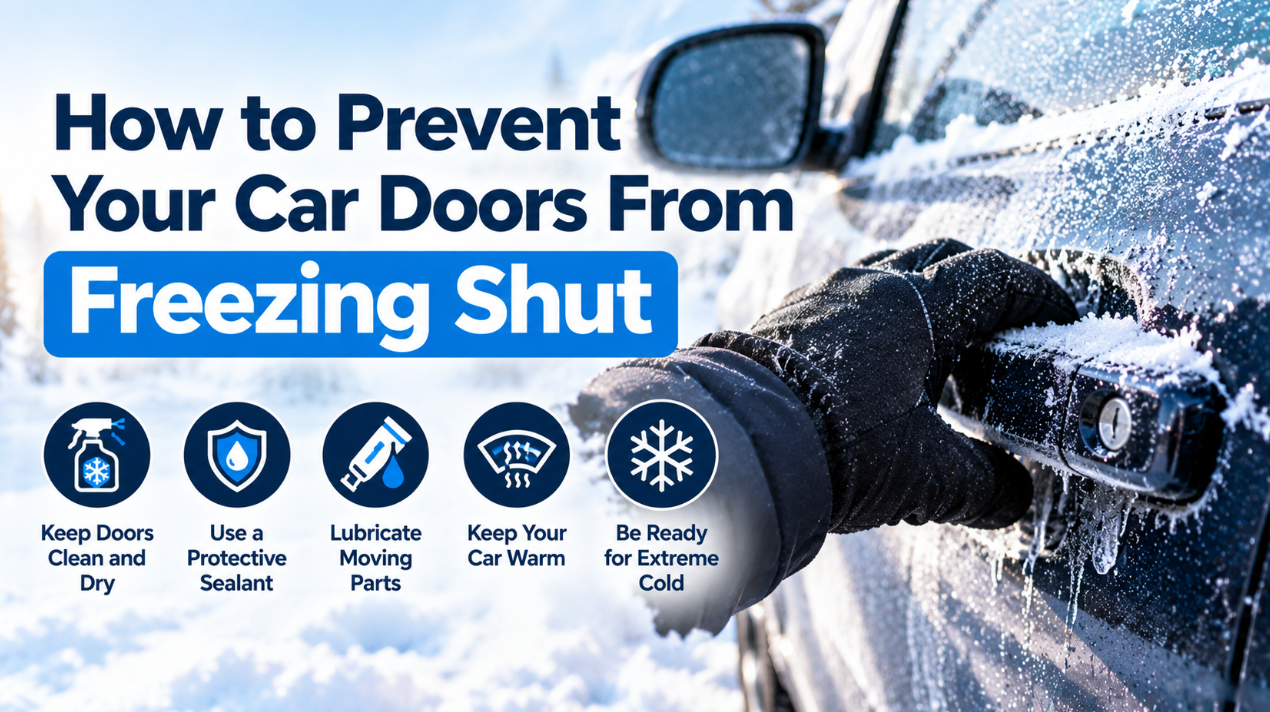
How to Prevent Your Car Doors From Freezing Shut
Frozen car doors are a common winter problem. Here's how to prevent your doors, locks and seals from freezing shut before it happens.
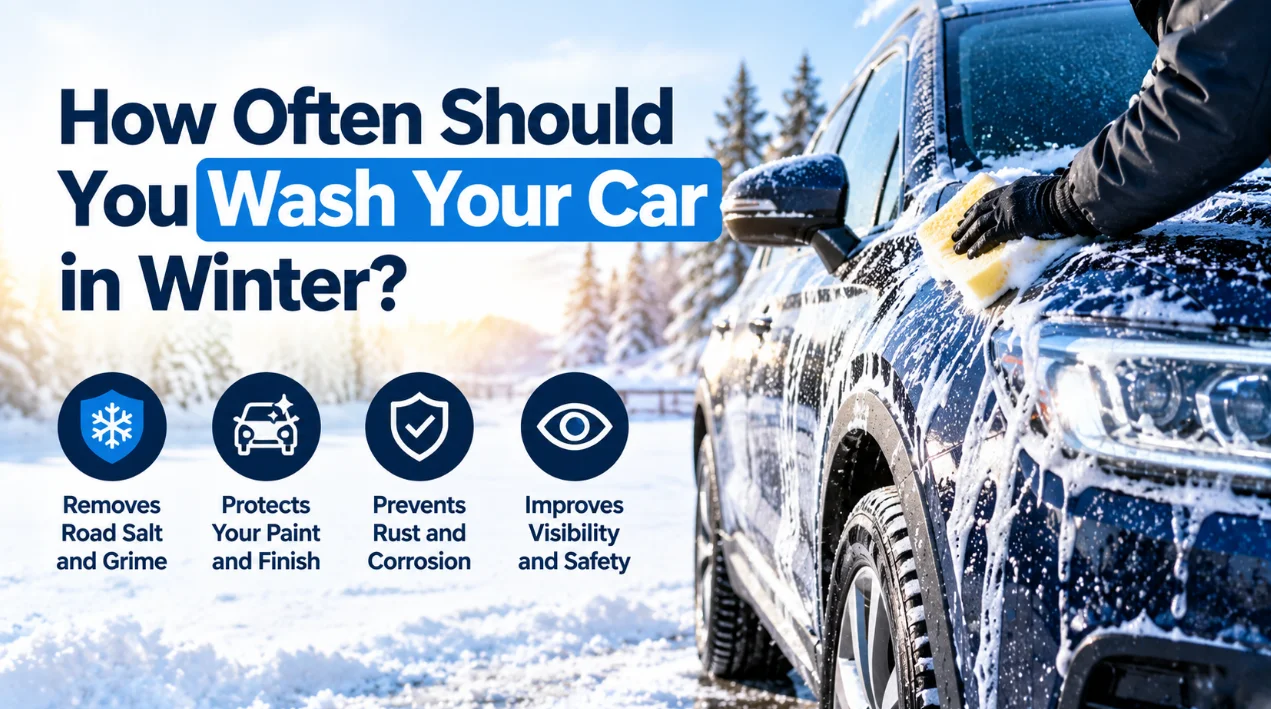
How Often Should You Wash Your Car in Winter?
How often should you wash your car in winter? Here's a practical schedule for Canadian drivers dealing with road salt and slush.