
How to Prevent Rust and Corrosion From Road Salt on Your Car
Prevent road salt rust with the right rustproofing method for your vehicle. Here's how corrosion forms and how to stop it before it starts.
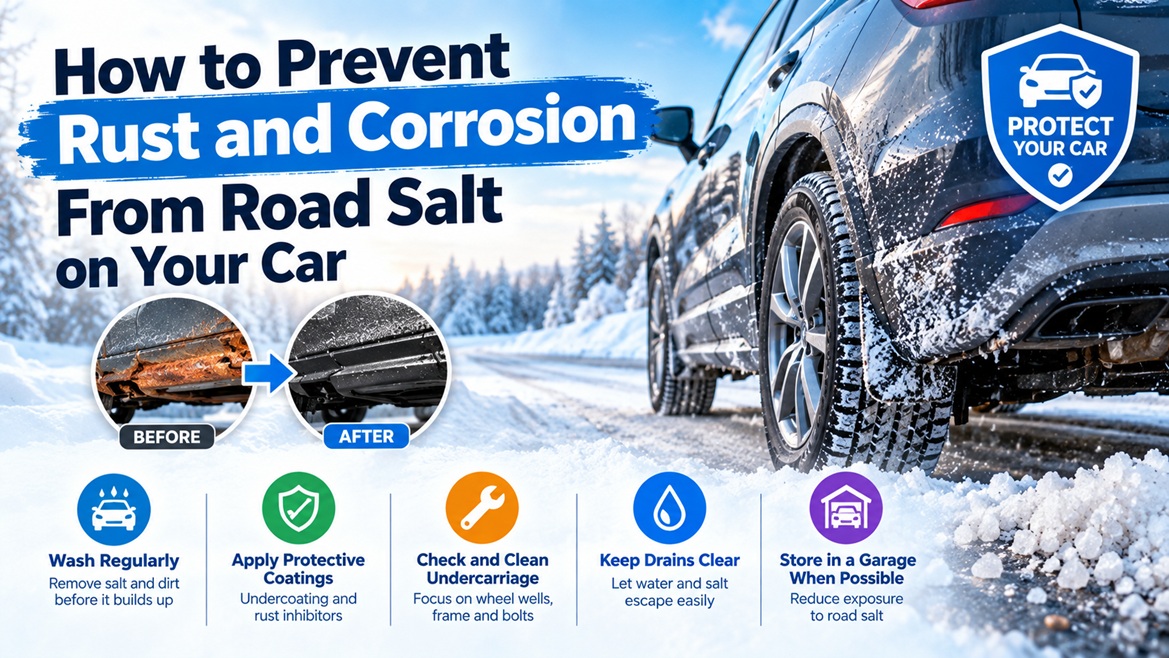
Road salt keeps Canadian highways safe, but it's also one of the most effective corrosion accelerants your vehicle will ever encounter. While our guide on protecting your car from road salt covers the washing and paint-chip routine every driver should follow, this guide goes a level deeper into the rustproofing methods that actually stop corrosion before it starts.
Why Road Salt Is So Corrosive
Rust forms when iron reacts with oxygen and water in a process called oxidation. Road salt dramatically accelerates this reaction by acting as an electrolyte, allowing electrical current to flow more easily across the metal surface and speeding up the corrosion process compared to plain water alone. This is why a vehicle regularly exposed to salted roads can rust through in years where a similar vehicle in a dry, salt-free climate would show no corrosion at all.
The Vehicle Areas Most at Risk
- Wheel wells and rocker panels, where salt spray accumulates constantly
- The frame and subframe, which sit closest to the road
- Brake lines, which are often thin-walled steel
- Exhaust systems, especially the muffler and pipe joints
- Door bottoms and hidden seams where water and salt can pool
Rustproofing Method Comparison
| Method | How It Works | Typical Frequency |
|---|---|---|
| Oil-based spray | Coats metal in a self-healing oil film | Annually |
| Undercoating (tar/rubber) | Forms a thick protective barrier | Once, reapplied as needed |
| Electronic rust protection | Uses a small electrical current to slow oxidation | Installed once |
| Ceramic coating (exterior only) | Protects paint, not underbody metal | Every 1-3 years |
DIY vs. Professional Rustproofing
Oil-based sprays are the most common DIY option and can be reapplied yourself annually with reasonable results, though they require getting underneath the vehicle safely. Undercoating and electronic rust protection systems are typically installed professionally and offer more hands-off, longer-lasting protection, which may be worth the added cost for a vehicle you plan to keep for many years.
Inspection Routine: Catching Rust Early
Once a year, ideally in spring after the salt season ends, inspect your wheel wells, rocker panels and the underside of doors for bubbling paint or surface rust. Caught early, surface rust can be sanded and treated before it spreads; left unaddressed, it eventually perforates the metal and becomes far more expensive to repair.
Combine With Regular Washing
No rustproofing method replaces regular washing. Rustproofing slows the rate of corrosion, but road salt sitting on metal for weeks still does damage even with a protective coating in place. Pair the methods on this page with the washing schedule in our guide on protecting your car from road salt for the most complete protection.
Frequently Asked Questions
Does rustproofing void my vehicle's warranty?
No, reputable rustproofing products and services do not void a manufacturer's warranty, though it's worth choosing an installer familiar with your vehicle to avoid accidentally damaging wiring harnesses or drain holes during application.
Is electronic rust protection worth the cost?
Independent results are mixed, and it works best as one layer of protection rather than a replacement for regular washing and inspection. Consider it a supplement, not a substitute, for the fundamentals.
About the author
NorthGrip Admin
Editor-in-chief at NorthGrip Auto.
Stay Winter-Ready
Get more winter driving tips and car care guides in your inbox.
Read Next

How to Choose the Right Winter Car Battery
Not all car batteries handle Canadian winters equally well. Here's what to look for, including cold cranking amps, size and battery type.
How to Prevent Your Car Doors From Freezing Shut
Frozen car doors are a common winter problem. Here's how to prevent your doors, locks and seals from freezing shut before it happens.

How Often Should You Wash Your Car in Winter?
How often should you wash your car in winter? Here's a practical schedule for Canadian drivers dealing with road salt and slush.