
How to Check Your Car Lights Before Winter
Shorter winter days mean your lights matter more. Here's a simple way to check every light on your car before winter driving begins.
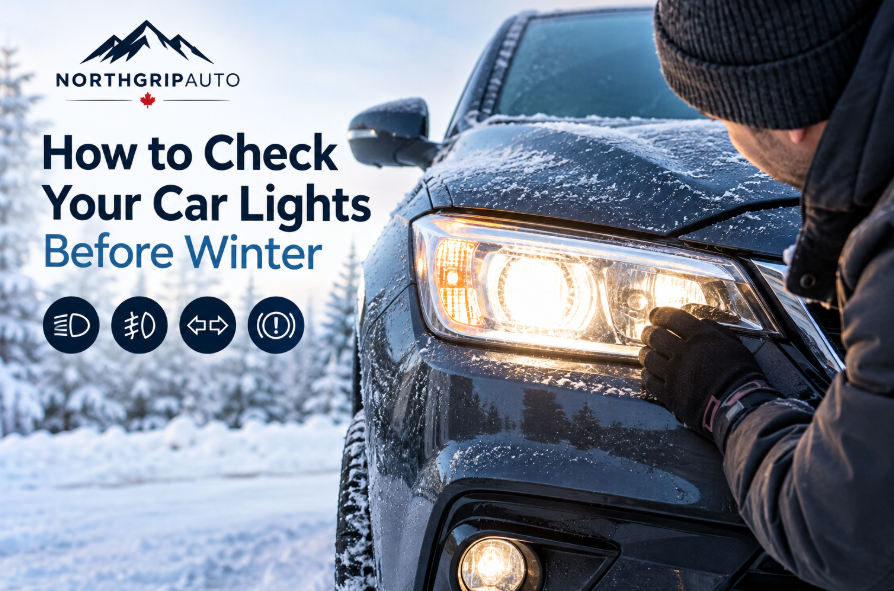
Checking your car's lights before winter takes about ten minutes: turn on each light in turn (headlights, high beams, tail lights, brake lights, turn signals and hazards) and walk around the vehicle, or ask someone to help, to confirm each one is working and clearly visible. Clean off any road grime, snow or ice from the lenses at the same time, since a working bulb behind a dirty or frosted lens still won't give you full visibility.
Daylight hours shrink significantly across most of Canada in the winter months, and snow, fog and freezing rain reduce visibility further. Lights that were "good enough" in summer sometimes aren't bright or clear enough for winter conditions, which makes a pre-winter check worth doing even if nothing has failed yet.
What to Check, Light by Light
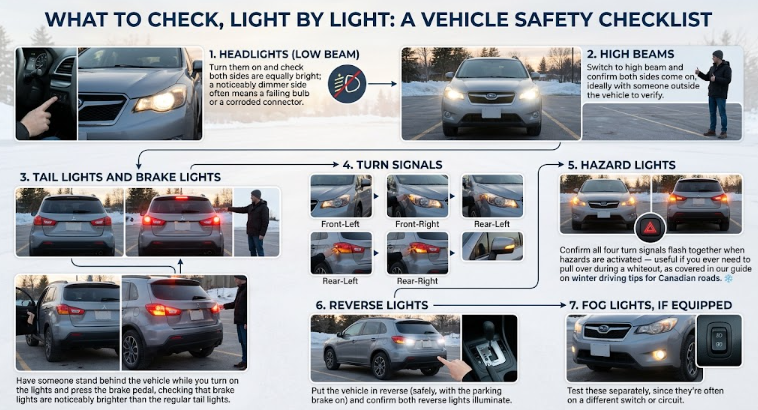
Headlights (low beam): Turn them on and check both sides are equally bright; a noticeably dimmer side often means a failing bulb or a corroded connector.
High beams: Switch to high beam and confirm both sides come on, ideally with someone outside the vehicle to verify.
Tail lights and brake lights: Have someone stand behind the vehicle while you turn on the lights and press the brake pedal, checking that brake lights are noticeably brighter than the regular tail lights.
Turn signals: Check all four corners, front and rear, plus side mirror indicators if your vehicle has them.
Hazard lights: Confirm all four turn signals flash together when hazards are activated — useful if you ever need to pull over during a whiteout, as covered in our guide on winter driving tips for Canadian roads.
Reverse lights: Put the vehicle in reverse (safely, with the parking brake on) and confirm both reverse lights illuminate.
Fog lights, if equipped: Test these separately, since they're often on a different switch or circuit.
Clean the Lenses, Not Just the Bulbs
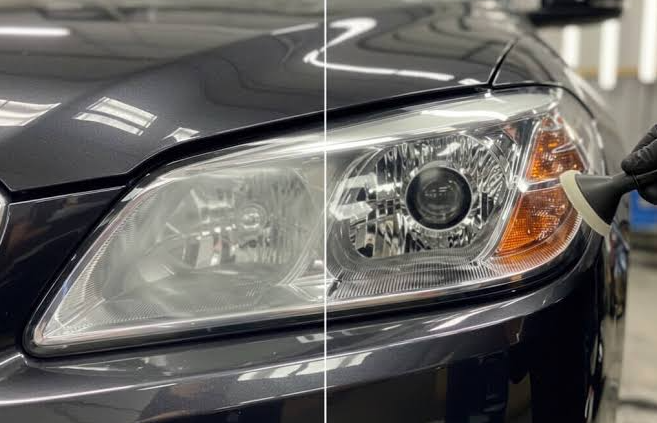
A perfectly good bulb behind a foggy, yellowed, or ice-covered lens still produces poor visibility. Clean headlight and tail light lenses periodically through the winter, and always clear snow and ice from every light before driving — not just the windshield. Our guide on removing ice from your windshield safely covers techniques that also work well on light lenses.
Signs a Bulb or Connection Is Failing
A light that flickers rather than staying steady
A light that's noticeably dimmer than its matching light on the other side
A fast-blinking turn signal, which on many vehicles indicates a burnt-out bulb on that circuit
A dashboard bulb-out warning light, on vehicles equipped with one
Why This Matters More in Winter
Beyond simple visibility, working lights are how other drivers know your intentions in reduced-visibility conditions like snow squalls and freezing fog. A burnt-out brake light or turn signal is a small fix that meaningfully reduces the risk of a collision, and it's one of the easier items to overlook until it's pointed out.
LED vs. Halogen Bulbs in Cold Weather
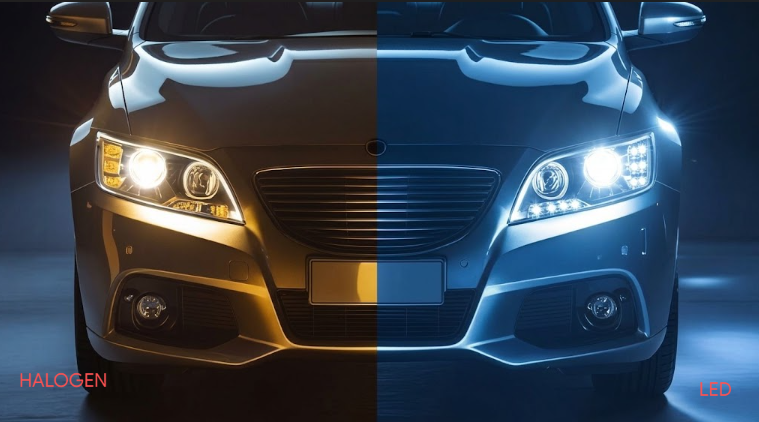
Halogen headlights produce some heat as a byproduct, which can help melt light snow accumulation on the lens over the course of a drive. LED headlights run cooler and more efficiently, but that same efficiency means they generate less heat, so snow and ice can sometimes build up on LED lenses more than on halogen ones. Either type works well when kept clear, but LED-equipped vehicles may need a bit more manual clearing after a snowfall, since the lights won't melt accumulation on their own the way halogen lights sometimes do.
Replacing a Bulb Yourself
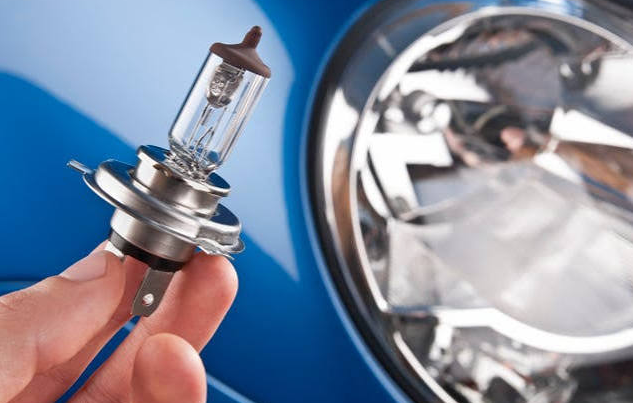
On many vehicles, replacing a basic exterior bulb, like a tail light or turn signal bulb, is a simple task that just requires accessing a panel or reaching behind the light housing. Headlight bulb replacement varies more by vehicle; some are simple, while others require removing surrounding panels or even partially removing the bumper. If a bulb replacement looks more involved than expected, or if a light isn't working even after a new bulb is installed (which can point to a wiring or fuse issue), it's a reasonable time to have a shop take a look rather than working through it yourself.
What About Interior Lights and the Dashboard?
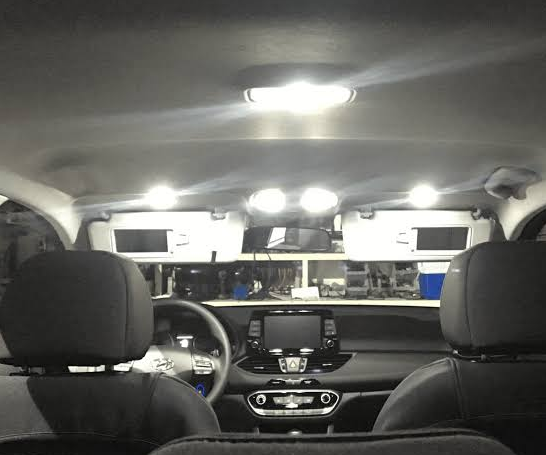
While exterior lights matter most for safety and visibility, it's also worth confirming your dashboard warning lights and interior lighting work properly before winter. A dashboard light that's burnt out could mean you miss an important warning (like a battery or brake alert) exactly when it matters most. Turn the ignition on without starting the engine to do a quick "bulb check," since most vehicles briefly light up all warning indicators at that point — if one doesn't illuminate during that check, it's worth asking a shop to look into it.
Aiming and Alignment
Headlights that are working but poorly aimed can still leave you with less visibility than intended, either shining too low to light up the road ahead or too high in a way that blinds oncoming drivers. Headlight aim can shift over time, sometimes after a pothole impact or a minor collision, even a small one. If your headlights seem to light up less road than they used to, or if other drivers frequently flash you thinking your high beams are on, an alignment check is worth adding to your pre-winter visit.
Why Winter Makes Light Problems More Noticeable
A slightly dim bulb or a poorly aimed headlight might go unnoticed on a well-lit summer evening but becomes obvious on a dark, snow-covered rural road in December. Reduced daylight hours mean more of an average commute happens in the dark during winter months, which is exactly why a light check that seemed unnecessary in July suddenly matters in November.
Make It a Habit
A full light check once before winter, plus a quick visual glance monthly, is enough for most drivers. Add it to your winter car maintenance checklist alongside your other seasonal checks, and pair it with the rest of the prep covered in our guide on preparing your car for a Canadian winter.
Frequently Asked Questions
Is it legal to drive with one headlight or tail light out?
Requirements vary by province, but in general, driving with a non-functioning required light can result in a ticket and is a genuine safety concern regardless of the exact local rule. It's best treated as something to fix promptly rather than something to check the rules on first.
Why does only one side of my headlights seem dimmer?
A dimmer bulb on one side is often the first sign that bulb is nearing the end of its life, even before it fails completely. It can also point to a corroded connector or wiring issue on that side, which a shop can diagnose if replacing the bulb doesn't resolve it.
About the author
NorthGrip Admin
Editor-in-chief at NorthGrip Auto.
Stay Winter-Ready
Get more winter driving tips and car care guides in your inbox.
Read Next
How to Choose the Right Winter Car Battery
Not all car batteries handle Canadian winters equally well. Here's what to look for, including cold cranking amps, size and battery type.
How to Prevent Your Car Doors From Freezing Shut
Frozen car doors are a common winter problem. Here's how to prevent your doors, locks and seals from freezing shut before it happens.
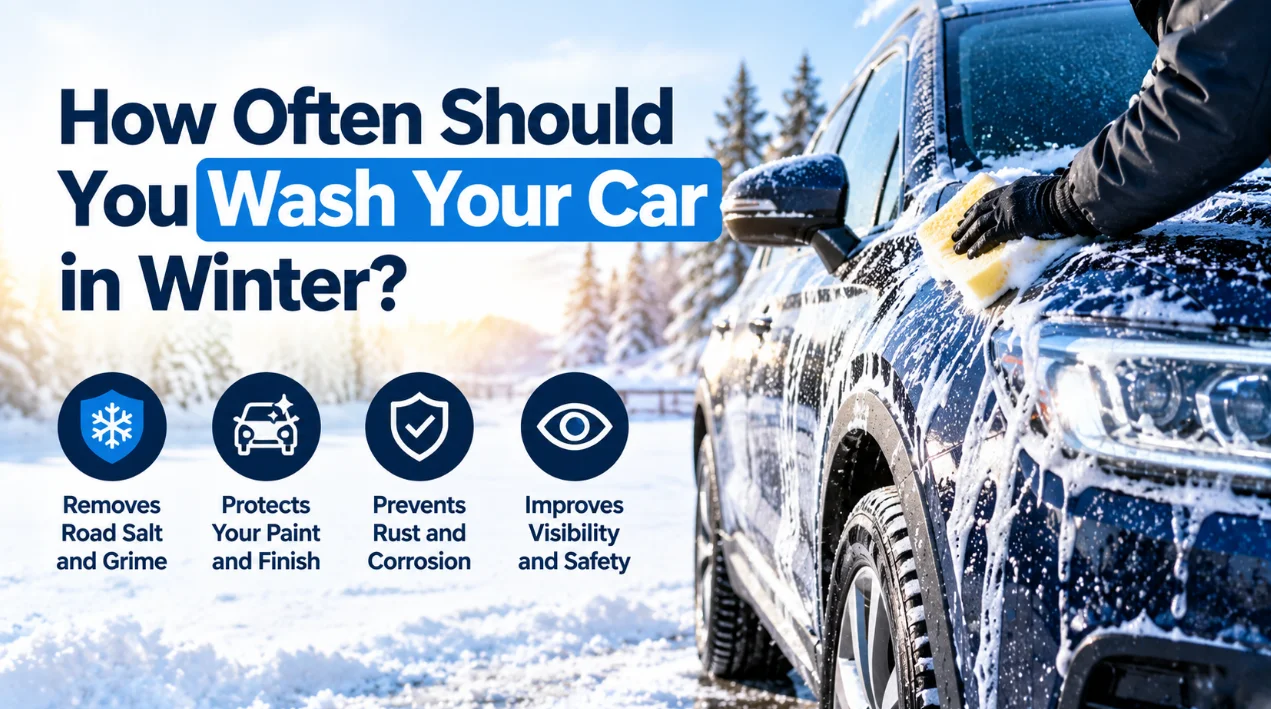
How Often Should You Wash Your Car in Winter?
How often should you wash your car in winter? Here's a practical schedule for Canadian drivers dealing with road salt and slush.