
AWD vs. 4WD vs. FWD in Winter: Which One Is Best for Snowy Roads?
AWD vs 4WD vs FWD in winter: here's how each drivetrain actually performs on snowy Canadian roads, and why tires matter more than most drivers think.
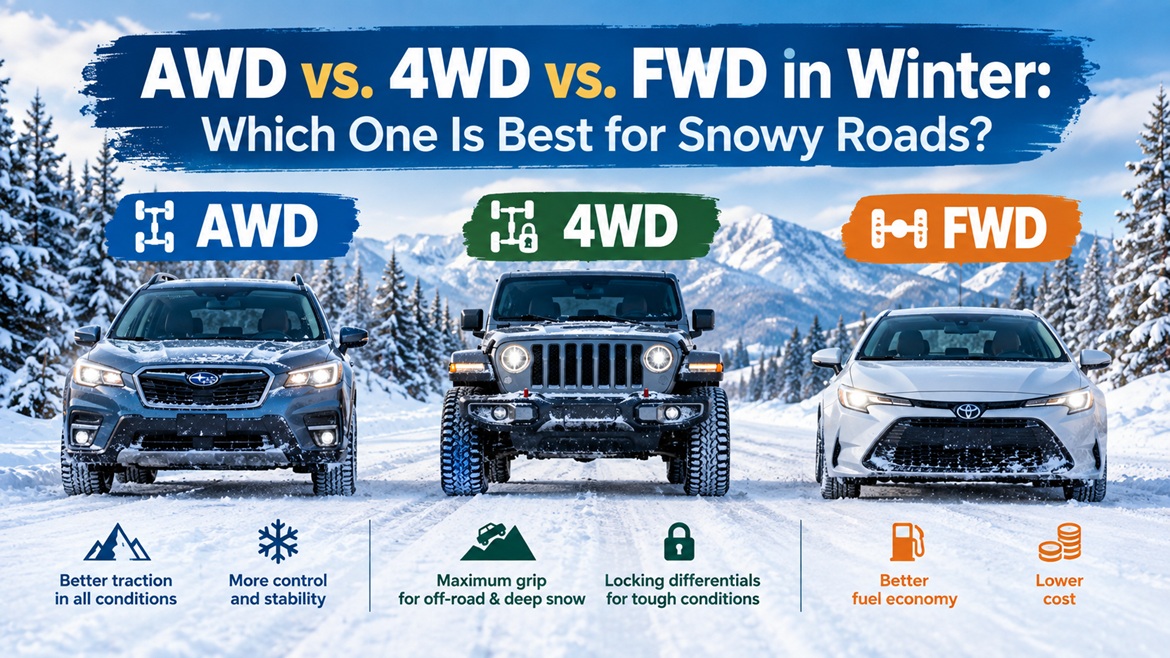
Few debates come up more often among Canadian car shoppers than AWD vs. 4WD vs. FWD for winter driving. Each drivetrain has real strengths and real limitations, and understanding what they actually do — and don't do — helps you make a better decision than following marketing alone.
How Front-Wheel Drive (FWD) Performs in Winter
Front-wheel drive puts the engine's weight directly over the drive wheels, which actually helps traction in snow more than many drivers expect. Combined with a good set of winter tires, FWD vehicles handle the vast majority of everyday Canadian winter driving, from commuting to highway trips, perfectly well.
How All-Wheel Drive (AWD) Performs in Winter
AWD systems, common in crossovers and sedans, automatically send power to whichever wheels have the most grip, improving acceleration traction on snow-covered or icy starts. This is genuinely useful for getting moving on a snowy hill or slippery parking lot, but AWD does nothing to improve braking distance or cornering grip, both of which depend entirely on your tires.
How Four-Wheel Drive (4WD) Performs in Winter
4WD systems, found mostly in trucks and SUVs, typically offer a driver-selectable low-range gear for serious off-road or deep-snow situations, along with locking differentials in some vehicles. This makes 4WD excellent for rural, unplowed, or off-road winter conditions, but it's often unnecessary, and sometimes even counterproductive, for everyday paved-road winter commuting.
Rear-Wheel Drive: The Exception
Rear-wheel drive vehicles, common in some sports cars and older trucks, generally perform the worst in snow without winter tires, since the weight distribution and lack of front-end traction assistance make them prone to fishtailing under acceleration. A good set of winter tires narrows this gap substantially but doesn't eliminate it entirely.
The Most Important Factor Isn't Your Drivetrain
This is the point worth repeating every winter: tires matter more than drivetrain for braking and cornering, which are involved in the vast majority of winter collisions. An AWD vehicle on all-season tires will still stop and turn worse on ice than a FWD vehicle on proper winter tires. See our full comparison of winter tires vs. all-season tires for the data behind this.
Drivetrain Comparison at a Glance
| Drivetrain | Best For | Limitation |
|---|---|---|
| FWD | Everyday commuting with winter tires | Less acceleration grip on ice/hills |
| AWD | Snowy starts, unplowed driveways | No braking/cornering advantage |
| 4WD | Rural, off-road, deep snow | Overkill for most paved commutes |
| RWD | Dry-weather performance | Weakest in snow without winter tires |
Which Should You Choose?
For most Canadian drivers commuting on plowed and salted roads, a FWD or AWD vehicle paired with genuine winter tires covers nearly every situation safely. Reserve 4WD for drivers who genuinely need to navigate unplowed rural roads, cottage access routes, or off-road conditions regularly. Whichever drivetrain you choose, review our complete guide on driving safely on ice and snow for the techniques that matter regardless of what's sending power to your wheels.
Frequently Asked Questions
Does AWD help you stop faster on ice?
No. AWD only affects power delivery to the wheels, not braking. Stopping distance depends almost entirely on your tires and the anti-lock braking system, not your drivetrain.
Is AWD worth the extra cost and fuel consumption?
It depends on your driving conditions. If you regularly face steep, snow-covered driveways or unplowed roads, AWD's traction advantage on acceleration can be genuinely useful. For mostly plowed, salted commuter routes, the benefit is smaller than many buyers expect.
About the author
NorthGrip Admin
Editor-in-chief at NorthGrip Auto.
Stay Winter-Ready
Get more winter driving tips and car care guides in your inbox.
Read Next
How to Drive Uphill and Downhill Safely on Snow and Ice
Hills change everything on snow and ice. Here's how to drive uphill and downhill safely, from momentum management to engine braking.
How to Stop Safely and Handle a Skid on Snow and Ice
Braking distances triple on ice, and skids happen fast. Here's how to stop safely on snow and ice, and what to do if your car starts to slide.
How to Drive Safely on a Snow-Covered Highway
Highway speeds make snow-covered roads more demanding. Here's how to drive safely on a snow-covered highway across Canada.