
How to Choose the Right Tire Chains for Winter Driving
Tire chains can be essential on mountain highways. Here's how to choose the right chains for your vehicle and where they're actually required.
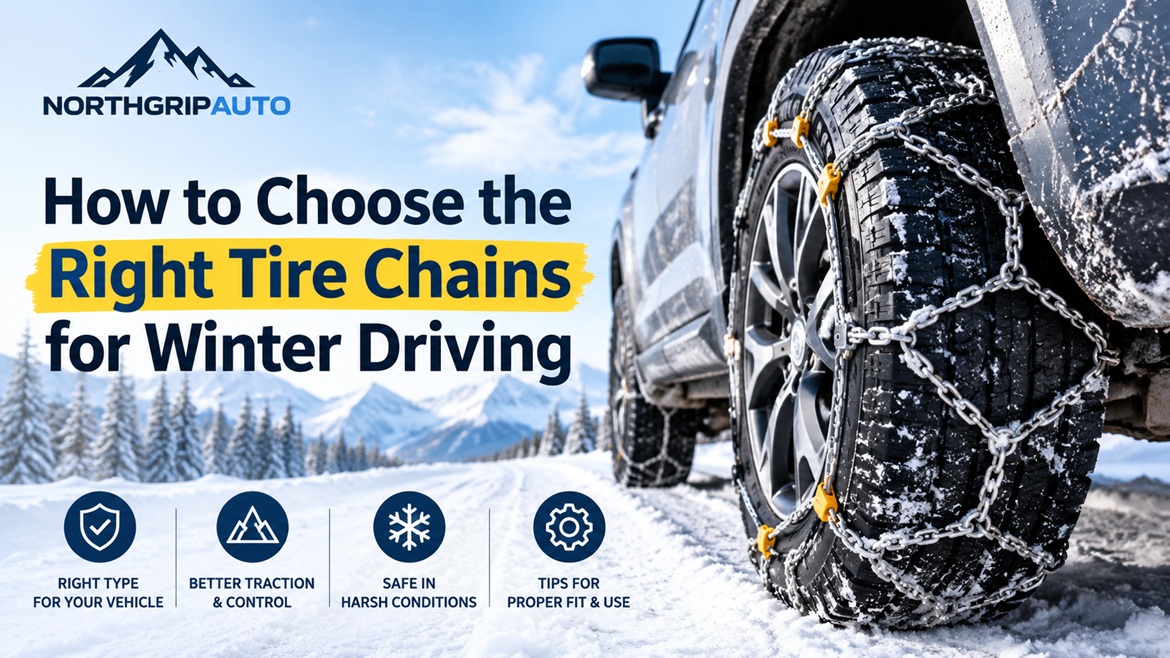
The right tire chains for winter driving are ones that correctly match your tire size, are approved for use on your specific vehicle (some vehicles, especially those with limited wheel well clearance, have restrictions), and are appropriate for how and where you'll actually use them, whether that's occasional mountain travel or more frequent use on unplowed rural roads. Chains are less about everyday winter driving and more about specific situations, like mountain passes with posted chain-up requirements, where winter tires alone aren't considered sufficient.
Chains aren't necessary for most Canadian winter driving, where good winter tires are sufficient, but they matter a great deal in the specific regions and conditions where they're required or genuinely useful. Here's how to choose correctly if you need them.
Do You Actually Need Chains?
Check whether your typical routes include mountain highways with posted chain-up requirements, common in parts of British Columbia and Alberta during winter storms. If you mostly drive on plowed and salted urban and highway routes, quality winter tires are usually sufficient without chains. If your driving regularly includes steep, unplowed, or officially chain-controlled routes, chains are worth having on hand even if you don't need them on most trips.
Matching Chains to Your Tire Size
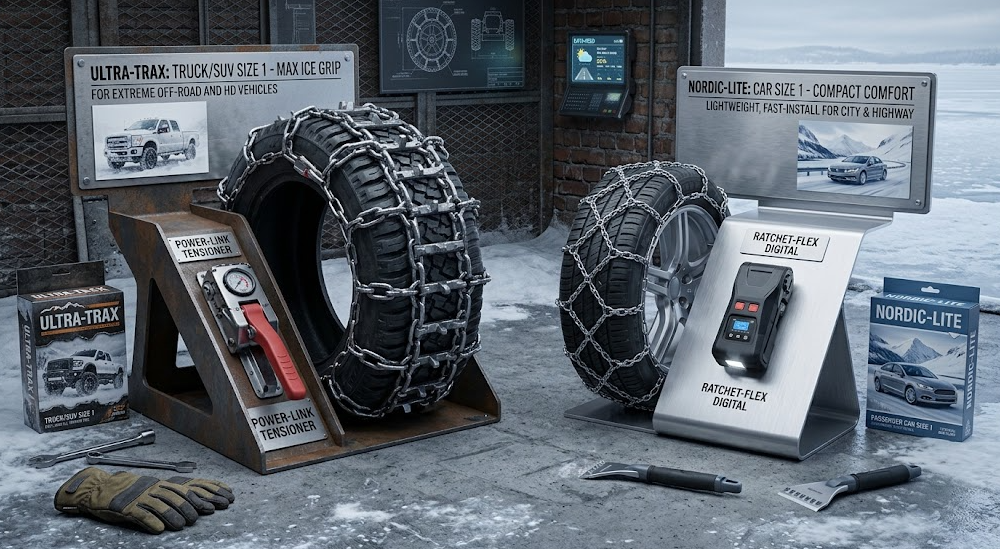
Tire chains are sized to specific tire dimensions, listed on the tire's sidewall (for example, a size like 225/65R17). Chain packaging or fitting guides list which tire size ranges each chain size fits; buying based on your vehicle model alone isn't reliable, since the same model may have different tire sizes across trims and model years.
Types of Tire Chains
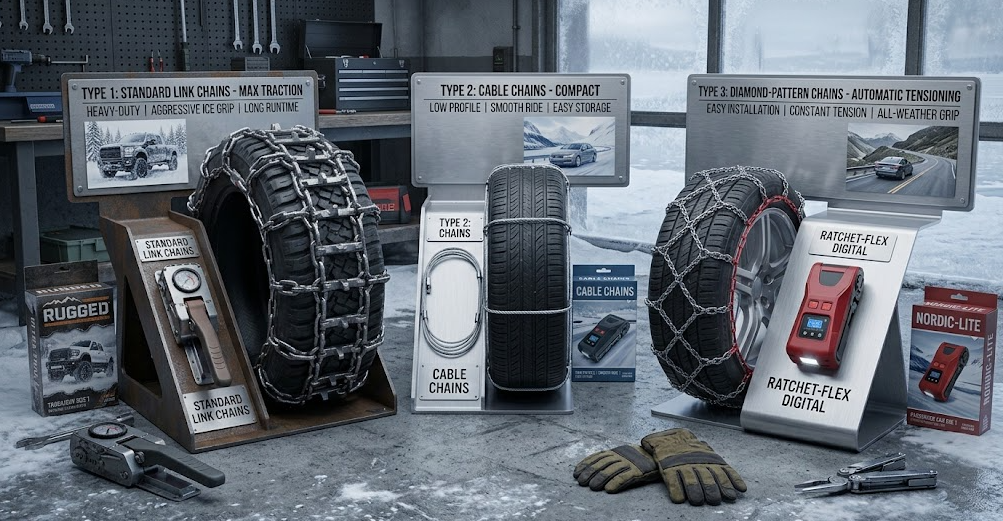
Type | Characteristics |
|---|---|
Standard link chains | Widely available, effective, generally the most affordable option |
Cable chains | Lighter and often easier to install; may offer less aggressive traction than link chains |
Diamond-pattern chains | Designed for smoother ride and reduced vibration compared to standard link patterns |
Vehicle Compatibility and Clearance
Not every vehicle can safely use chains. Limited clearance between the tire and wheel well, common on some lower vehicles or those with larger factory wheels, can cause chains to rub against the body or suspension components. Check your owner's manual for specific chain guidance, including which chain types (if any) are approved and on which axle they should be installed, since some vehicles specify front-only or rear-only use depending on drivetrain.
Learning to Install Them Before You Need To
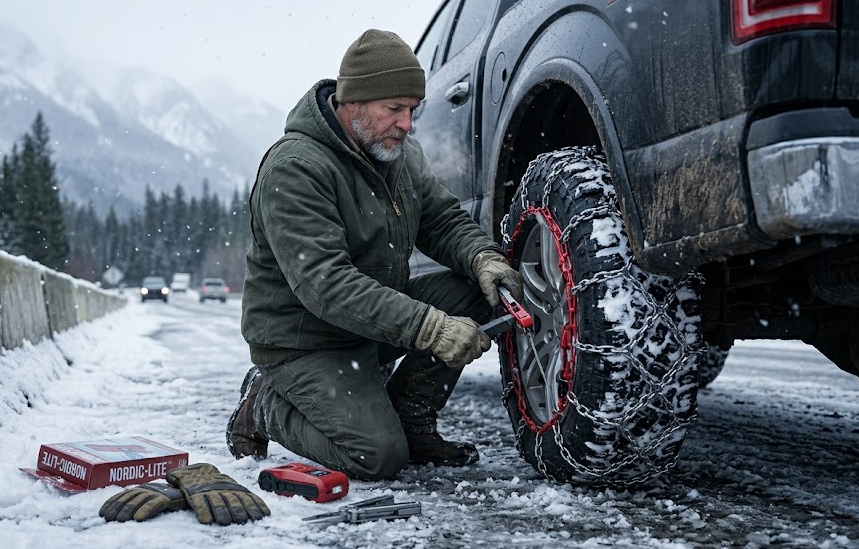
Installing chains for the first time on the side of a snowy highway, in the dark, with cold hands, is a difficult way to learn. Practice installing and removing your chains at home in a driveway or garage before you actually need them, so the process is familiar when conditions require it.
Driving With Chains On
Manufacturers typically specify a maximum safe speed with chains installed, often well below highway speed. Remove chains once you're back on a clear, dry, or well-maintained road, since driving on chains longer than necessary increases wear on both the chains and the road surface, and can affect handling on surfaces they're not designed for.
Chains vs. Winter Tires: Not a Substitute
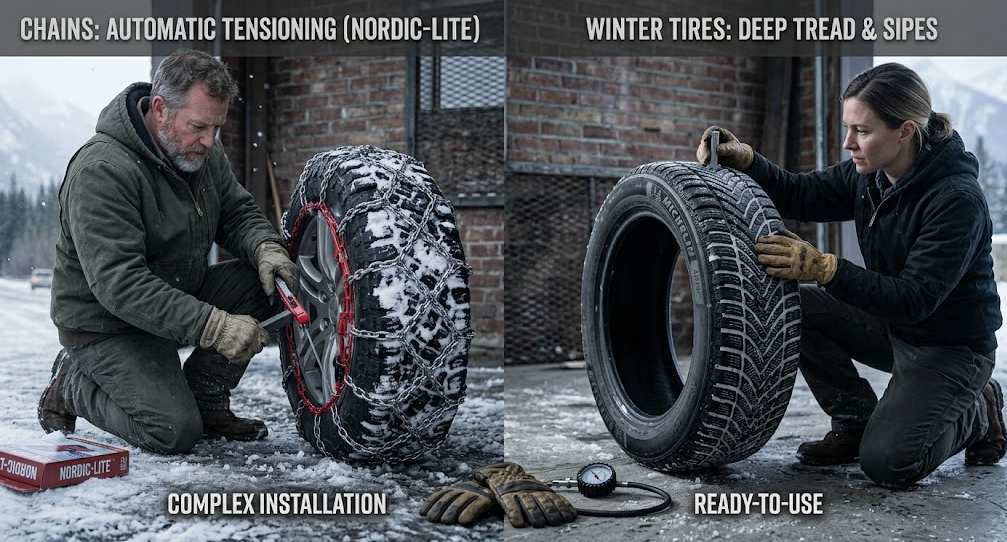
Chains are a supplement for specific severe conditions, not a substitute for proper winter tires. See our comparison of winter tires vs. all-season tires, and our guide on driving uphill and downhill safely on snow and ice for the grade-specific techniques where chains often come into play.
Cost and Where to Buy
Tire chains range widely in price depending on type and quality, with cable chains generally at the lower end and premium diamond-pattern link chains at the higher end. Specialty tire and automotive retailers, particularly in regions where chains are commonly required, typically offer better fitting guidance than general retailers, which can be worth the extra effort of visiting in person rather than ordering online without a proper fit check.
Legal Requirements and Enforcement
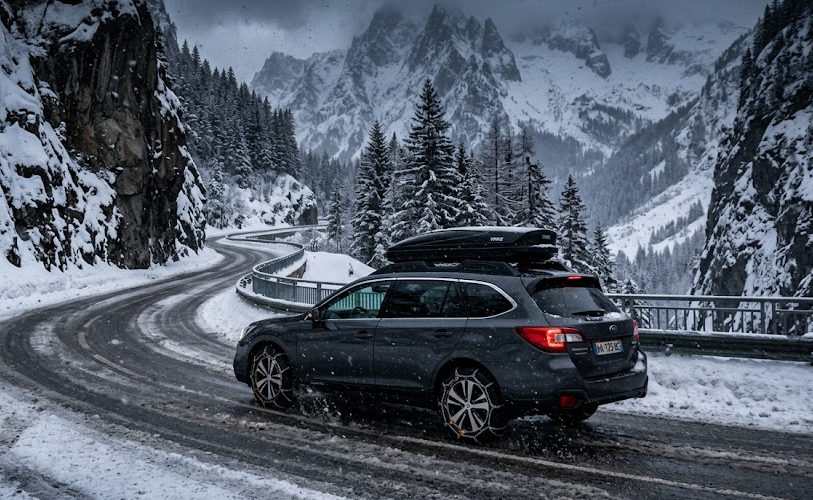
Some mountain highway corridors enforce chain-up requirements with signage and, at times, active checks during severe weather, and driving through a chain-controlled zone without required chains when conditions call for them can result in penalties in addition to the safety risk. Always check current provincial transportation advisories for the specific route you're planning to travel, since requirements can be activated or lifted based on real-time conditions.
Storing and Maintaining Chains
Rinse chains after use to remove road salt, which can cause corrosion over time, and dry them before storing to prevent rust. Inspect for damaged or stretched links before the season starts each year, since a compromised chain can fail or come loose while driving.
Frequently Asked Questions
Can I use chains on all four tires?
Check your owner's manual; some vehicles specify chains only on the drive axle, while others allow or require all four. Following the manufacturer's specific guidance matters both for safety and for avoiding damage to the vehicle.
Are cables a good alternative to chains for occasional use?
Cable-style traction devices can be a reasonable, easier-to-install option for drivers who only occasionally need chain-level traction, though they may offer somewhat less aggressive grip than standard link chains in the most severe conditions.
Do rental vehicles come with chains for mountain driving?
This varies by rental company and location; some offer chains as an optional add-on, particularly at locations near mountain resorts, while others don't provide them at all. Ask directly when booking if your trip includes mountain routes with potential chain requirements.
Do chains wear out and need replacing?
Yes, links can stretch, weaken or corrode over time and repeated use, particularly if not rinsed and dried properly after exposure to road salt. Inspect them each season before you might need them, and replace any set with visibly damaged or heavily worn links rather than risking a failure on the road.
Do I need chains if I already have winter tires?
In most everyday conditions, no. Chains become relevant specifically in posted chain-control zones or severe conditions beyond what winter tires alone are considered sufficient for, most commonly on certain mountain highway corridors during active storms.
How long does it typically take to install chains roadside?
With practice, most drivers can install a set of chains in roughly ten to fifteen minutes, though this varies by chain type and experience level. This is exactly why practicing at home beforehand, as mentioned earlier, makes a meaningful difference when you actually need to do it in cold, less convenient conditions.
About the author
NorthGrip Admin
Editor-in-chief at NorthGrip Auto.
Stay Winter-Ready
Get more winter driving tips and car care guides in your inbox.
Read Next
Winter Tires vs. All-Season Tires: What Canadian Drivers Need to Know
Winter tires vs all-season: here's how they actually perform in Canadian conditions, and why the difference matters more than most drivers think.
How Cold Weather Affects Tire Pressure and What You Should Do
Tire pressure in cold weather drops fast and can catch drivers off guard. Here's how much you lose, why it matters, and how often to check.
When Should You Install Winter Tires in Canada?
Timing your winter tire installation correctly makes a real difference in safety and tire longevity.